
DMSO Wild Yam Cream



My unique Wild Yam Cream with DMSO is a concentrated transdermal botanical preparation formulated to support the hormonal terrain of children, women, and men. Wild yam, black cohosh, and chasteberry are each extracted four separate times using water, oil, alcohol, and DMSO. The completed extracts are then combined to create a comprehensive botanical matrix containing water-soluble, lipid-soluble, alcohol-soluble, and DMSO-compatible plant constituents for maximum extraction and effectiveness. Yeah, I was going for potency and maximalism, and that’s what I got!
This quadruple-extraction process gathers a much wider spectrum of each plant than a conventional tea, tincture, infused oil, or single-solvent extract would offer. These four extraction mediums access different fractions of the botanical material, allowing the finished cream to deliver a more complete representation of each herb.
DMSO (dimethyl sulfoxide, sulfinylbismethane) is a powerful transdermal penetration enhancer used for its own health benefits and additionally to increase the movement of medicinal substances across the skin barrier. It alters the permeability of the stratum corneum and assists compatible compounds in reaching deeper tissues, where systemic absorption may occur. DMSO possesses recognised and studied inflammatory-modulating, blood-detoxifying, and analgesic properties and is an active component of this special preparation. I have multiple masterclasses on DMSO if you wish to learn more.
Wild yam, black cohosh, and chasteberry in this remedy are delivered in a preparation designed for transdermal botanical use only. The formula helps with surface moisture and skin health, but goes much further by delivering the extracted plant constituents to the tissues and greater circulation for maximum effect.
Wild yam, Dioscorea villosa, contains steroidal saponins, including diosgenin and related compounds. Diosgenin is used industrially as a starting material in the laboratory manufacture of steroid hormones. It is a relatively small, lipid-soluble steroidal sapogenin with a molecular weight of approximately 414 Da. Its physicochemical profile makes transdermal movement plausible, particularly when it is dissolved in a suitable vehicle and paired with a penetration enhancer such as DMSO. Its poor water solubility is a major limitation in conventional preparations. There is no need for nano-crystal technology when we have DMSO to help extract medicine and then carry things through the skin.
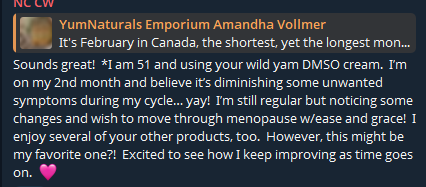
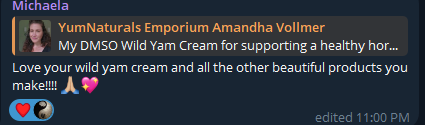
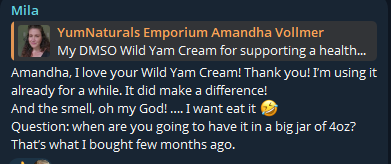
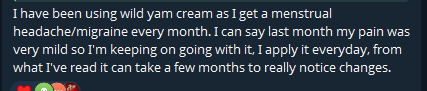
Wild yam has a long history of use in traditional women’s herbalism for menstrual cramping, pelvic tension, menopausal changes, muscular tension, and hormonally associated tissue inflammation and pain. I have received great feedback on this product so far, assisting with pain, hot flashes, bleeding, and even mood swings. Once absorbed, diosgenin does not need to become progesterone to have biological activity. It acts as diosgenin. Laboratory and animal research shows that it interacts with numerous cellular signalling systems involved in inflammatory regulation, oxidative stress, lipid metabolism, glucose regulation, vascular physiology, neuronal repair, and cell proliferation.

Black cohosh, Actaea racemosa, contains triterpene glycosides, phenolic acids, aromatic compounds, and other specialised constituents associated with perimenopause and menopausal support. It is used for hot flashes, night sweats, cold flashes, menstrual cramping, sleep disruption caused by cortisol surges, and nervous system agitation occurring during menopause. Research on black cohosh preparations has produced variable findings because the extracts, concentrations, plant material, and manufacturing methods differ considerably between products. Certain standardised extracts and combination formulas have demonstrated improvement in menopausal symptoms, and testimonials/feedback have also given us direction for formulation.
Chasteberry, Vitex agnus-castus, contains iridoid glycosides, flavonoids, diterpenes, and volatile constituents. It has an established history of medicinal use for premenstrual symptoms, cyclical breast tenderness, menstrual irregularity, dysmenorrhoea, altered cycle length, and hormonally associated bleeding patterns. Chasteberry is also used when prolactin signalling and pituitary-ovarian communication are contributing to overall cyclical symptoms.
Together, these powerful botanicals provide broad hormonal and neuroendocrine support for children, women, and men. In children and adolescents, the formula supports menarche, menstrual stability, reduces cyclical pain, helps with temperature fluctuations, emotional dysregulation, and sleep disturbances. Women can use it to prepare for a pregnancy (along with natural progesterone cream), irregular cycles, hot flashes, night sweats, pelvic cramping, cyclical breast pain, abnormal bleeding patterns, perimenopause, and menopause. Men can use it during age-related hormonal changes associated with disturbed sleep, mood changes, reduced libido, muscular pain, and prostate-related symptoms. Persistent heavy bleeding, bleeding after menopause, bleeding during pregnancy, or unexplained bleeding requires proper investigation.
My formula should be introduced conservatively, starting very slowly, because chasteberry influences neuroendocrine signalling. It also may interact with medications that affect dopamine, prolactin, reproductive hormones, or hormone-responsive tissues.
Now for the supporting factors: olive oil and shea butter supply fatty acids and occlusive lipids that condition the skin, help with the skin barrier, and help to preserve the medicine in the blend. Vitamin E and rosemary extract protect the lipid portion of the preparation from oxidation while contributing their own antioxidant plant compounds.
Specific essential oils were chosen for this formula.
Geranium essential oil contains citronellol, geraniol, linalool, isomenthone, and related monoterpenes. These constituents provide analgesic, antioxidant, inflammatory-modulating, circulatory, and smooth-muscle-regulating actions. In children and adolescents, geranium is included for acne, tissue swelling, muscular pain, and nervous agitation during developmental hormone changes. For women, it can address menstrual cramping, menstrual breast pain, fluid accumulation, pelvic vascular congestion, and changes in skin and tissue tone during perimenopause and menopause. In men, its circulatory and fluid-regulating actions help with tissue swelling, peripheral vascular sluggishness, muscular pain, and changes in skin and connective tissue associated with hormonal ageing.
Clary sage essential oil contains linalyl acetate, linalool, and sclareol. Linalyl acetate and linalool reduce excessive nervous-system excitation and smooth-muscle spasm, while sclareol contributes antioxidant and inflammatory-modulating activity. In adolescents, clary sage is included for uterine cramping, nervous agitation, emotional volatility, and disturbed sleep as menstrual cycles become established. In women, it acts on menstrual pain, uterine spasm, hot flashes, night sweats, sleep disruption, and autonomic instability during perimenopause and menopause. For men, its neurological and muscular actions address those systems.
Rosemary essential oil supplies 1,8-cineole, camphor, alpha-pinene, borneol, and alpha-terpineol. These volatile compounds stimulate sensory and neurological activity, increase local perfusion, reduce pain, and strengthen respiratory and neuromuscular function. In children and adolescents, rosemary is included for poor concentration, mental fatigue, muscular pain, physical exhaustion, and sluggish peripheral circulation. In women, it can help with cognitive fatigue, muscular stiffness, reduced alertness, and diminished physical stamina during menstrual and menopausal transitions. In men, rosemary supports mental acuity, joint mobility, muscular performance, scalp circulation, respiratory capacity, and declining physical vitality with age.
Red thyme essential oil contains thymol, carvacrol, and related monoterpenes, with the exact proportions determined by its chemotype. These constituents provide strong warming, analgesic, antioxidant, inflammatory-modulating, circulatory, and tissue-stimulating actions. In children and adolescents, red thyme is included for cold extremities, muscular pain, respiratory weakness, and slow recovery after physical exertion. In women, its warming and circulatory actions address pelvic congestion, uterine cramping, coldness, muscular tension, and reduced blood movement through the lower abdomen. In men, red thyme is included for overworked muscles, poor peripheral circulation, and respiratory weakness.
Together, these essential oils intensify the medicinal action of the quadruple-extracted wild yam, black cohosh, and chasteberry. The result is a rich, highly specialised formula that combines these four separate botanical extraction methods with the transdermal carrying capacity of DMSO and supportive assists. This is a medicinal botanical cream created to deliver a wide spectrum of plant constituents through the skin for local tissue exposure and systemic absorption.
There is no other cream on the market designed, extracted, and formulated in this way. This is an original medicinal, all-natural preparation built from the ground up through a process that does not exist in conventional botanical manufacturing.
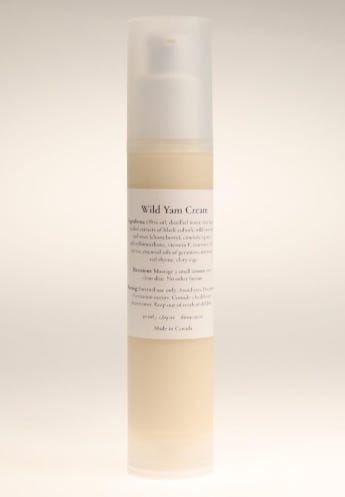
Ingredients: Olive oil, shea butter, emulsifying wax, sulfinylbismethane (DMSO), quadruple-extracted wild yam (Dioscorea villosa), quadruple-extracted black cohosh (Actaea racemosa), quadruple-extracted chasteberry (Vitex agnus-castus), rosemary extract, essential oils of geranium, rosemary, red thyme, and clary sage, vitamin E.
For external use only. Apply to clean, dry, unbroken skin. Wash the application area first and ensure that it is free from perfumes, lotions, synthetic residues, and other chemicals because DMSO increases skin penetration. Do not get on synthetic fingernails. Avoid contact with the eyes, mucous membranes, irritated tissue, and open wounds. Begin with a small test application. Discontinue use if persistent irritation develops.
Consult a knowledgeable holistic clinician before use during pregnancy or breastfeeding, with a history of hormone-sensitive cancer, unexplained uterine bleeding, liver disease, fertility treatment, or when using hormonal medications, dopamine-related medications, anticoagulants, or medicines that affect prolactin. Keep tightly closed and store in a cool, dry place away from direct light. Keep out of reach of children.
Explore my complete range of handcrafted natural remedies, botanical extracts, DMSO formulations, mineral preparations, herbal products, skincare, personal-care formulas, and practical tools for health sovereignty. Every product is created with a clear physiological purpose using carefully selected herbs, oils, minerals, and/or other natural compounds.
Across DMSO.store and YumNaturals.store, you will find original formulas for pain, hormonal health, circulation, tissue repair, detoxification, mineral restoration, skin health, hair care, eye care, oral health, neurological support, and the whole-body terrain from a non-germ theory stance. Every extract I create is original, highly specialised, and made through distinctive extraction and formulation methods that are unavailable anywhere else. Each product is handcrafted through a heart-centred process with focused intention and the appropriate energetic imprint for the formula. Once complete, every preparation is individually tuned with a 432 Hz tuning fork to bring the finished product into coherent resonance before it journeys to you.
Mentioned in the video:
50% DMSO with Magnesium chloride is called Magnesium Enriched Cosmetic Solution: https://dmso.store/product/50-dmso-with-natural-magnesium/
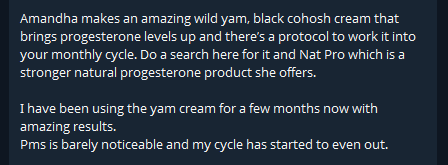
Wild Yam Cream: https://dmso.store/product/wild-yam-cream-with-dmso/
We have a new B-complex in stock: https://yumnaturals.store/shop/synergy-b-complex/
Learn more about DMSO at https://Yummy.Doctor
Get my book: https://HealingwithDMSO.com
For those in the States, click SHOP USA.
https://dmso.store/usa-eligible-products/
PMA: a free account is required to purchase.
sulfinylbismethane = DMSO
COMMONLY ASKED QUESTIONS
Can I use NatPro progesterone cream and ADV’s Wild Yam Cream together?
Yes. These formulas perform different functions and can be used together.
NatPro contains bioidentical progesterone. It supplies progesterone directly through the skin. ADV’s DMSO Wild Yam Cream does not contain progesterone. It contains quadruple-extracted wild yam, black cohosh, and chasteberry, combined with selected essential oils and DMSO. The Wild Yam Cream supplies a broad spectrum of medicinal botanical constituents that support overall terrain and hormone action, while DMSO increases their movement across the skin barrier and into deeper tissues.
Using both products gives you direct progesterone support from NatPro alongside the broader botanical, neurological, circulatory, antispasmodic, and hormonal terrain support of the Wild Yam Cream.
Do I use NatPro and Wild Yam Cream at the same time?
They can be applied during the same part of the day, although I prefer using them on separate areas of clean, unbroken skin. This allows you to rotate application sites and reduces repeated exposure to one area.
Apply the Wild Yam Cream only after washing the skin and removing lotions, perfumes, body oils, synthetic residues, and any other chemicals. DMSO increases skin permeability, so the cleanliness of the application area matters. DMSO is a recognised transdermal penetration enhancer.
What is the usual dose of ADV Wild Yam Cream?
The standard adult starting dose is approximately 1/8 teaspoon (approx 1-2 pumps) applied twice daily, but up to 1/2 tsp has been used successfully as everyone is slightly different.
A lower introductory dose is approximately 1/8 teaspoon once daily. This is useful when you are highly reactive, introducing several hormonal products at once, or experiencing pronounced changes in bleeding, sleep, mood, temperature regulation, breast tissue, or energy.
Increase the amount gradually according to your response. More cream is not automatically more therapeutic. Your response will determine whether the amount is appropriate for you.
Because this cream contains DMSO and several concentrated botanical extracts, I do not recommend establishing an unlimited upper dosage. If you are increasing beyond 1/8 teaspoon twice daily, increase in small increments and carefully record changes in bleeding, headaches, breast pain, mood, sleep, temperature, digestion, and energy.
Where should I apply the cream?
Rotate the cream among areas with clean, intact skin, including:
• Lower abdomen
• Inner thighs
• Sacrum and lower back
• Inner arms
• Shoulders
• Upper chest, avoiding direct application over irritated breast tissue
• Areas of muscular pain or tension; the face, as long as clean
Rotation prevents repeated exposure to the same skin and gives you a broader application surface. Avoid the eyes, broken skin, freshly shaved skin, rashes, synthetic residues, and recently treated surfaces.
Should a menstruating woman use the cream throughout the entire month?
I prefer you to follow your natural progesterone pattern whenever your cycle is still active, but you can use it throughout if you choose.
Day 1 is the first day of full menstrual bleeding. Ovulation generally occurs approximately 14 days before the next period, although cycle length and ovulation timing vary. For a 28-day cycle, the cream is generally introduced around day 14. For a 21-day cycle, ovulation occurs much earlier. For a 36-day cycle, it occurs later.
The general guiding principle is to begin around ovulation and use the cream through the luteal phase, which is the final portion of your cycle. A calendar app, basal temperature chart, cervical fluid observations (i.e., Justisse), ovulation testing, and symptom journaling can help identify your personal timing.
The cream can also be used throughout the month when stronger ongoing support is required, although continuous use no longer mirrors the cyclical rise and fall of progesterone. You need to observe how continuous use affects your ovulation, cycle length, bleeding, headaches, mood, sleep, and breast tissue.
Should I stop when my period begins?
When a full menstrual period begins, stop NatPro and the Wild Yam Cream and count that day as day 1 of the new cycle. Resume around ovulation or approximately 14 days before the next period is expected.
A few spots do not necessarily represent a new cycle. Track whether bleeding develops into your normal menstrual flow. When full bleeding begins early, treat it as a new day 1.
What if I begin bleeding only a few days after restarting the creams?
An early period means your cycle has shifted. Stop both products when full bleeding begins, record that day as day 1, and restart during the luteal phase of the new cycle.
Do not automatically interpret heavy bleeding, clotting, or prolonged bleeding as the uterus cleansing itself, even though it most often is this. The final menstrual cycle should have cleaned everything out. If you are menopausal and haven’t had a cycle in a while, using this cream can bring back your cycle temporarily, but this was needed for a cleaning house. That means your last cycle did not successful clean out your uterus as it should have.
Hormonal products can alter bleeding patterns, especially during perimenopause, although bleeding also changes with anovulatory cycles, fibroids, adenomyosis, polyps, thyroid dysfunction, endometrial changes, pregnancy loss, medications, and other conditions. So, beyond this, there could be an underlying issue that the cream is helping you identify, so make sure to use a health journal to gain more insight.
Bleeding that saturates a pad or tampon every hour, produces repeated large clots, causes faintness or shortness of breath, continues unusually long, begins during pregnancy, or occurs after menopause requires prompt medical investigation.
Is cycle disruption normal when I begin NatPro or Wild Yam Cream?
A change in cycle length, spotting, delayed bleeding, or an earlier period can occur when progesterone is introduced into an irregular or perimenopausal cycle. Perimenopause frequently includes inconsistent ovulation and substantial hormonal variability, so it is important to document what happens instead of assuming every change comes from the cream.
Begin with one clearly measured dosage, keep the rest of your routine stable wherever possible, and record your daily response. Introducing progesterone, Wild Yam Cream, iodine, boron, selenium, vitamin D, magnesium, MSM, and frequent coffee enemas at the same time makes it difficult to determine which intervention produced a particular change, so add one thing at a time.
Why do I get migraines at the beginning of my period?
Menstrual migraines are strongly associated with the rapid decline in estrogen that occurs immediately before menstrual bleeding. Progesterone is also falling during this phase, creating an abrupt neuroendocrine transition that affects cerebral blood vessels, serotonin signalling, pain processing, fluid regulation, and neuronal excitability. Perimenopause magnifies these shifts because estrogen frequently rises and falls unpredictably during irregular or anovulatory cycles.
This is why migraine timing will matter. Record whether the migraine begins before bleeding, on day 1, after ovulation, or after changing the amount of NatPro or Wild Yam Cream. The timing helps distinguish estrogen withdrawal, progesterone sensitivity, altered blood sugar, dehydration, muscular tension, magnesium insufficiency, and other contributing patterns.
Do not change the dosage repeatedly during a migraine without documenting the timing. A consistent daily record of your symptoms provides more useful information than reacting to each symptom independently.
What if I feel worse after increasing NatPro?
Fatigue, mood changes, breast pain, altered bleeding, headache, or a return of previous symptoms after increasing NatPro means the dosage or timing needs reassessment. It does not automatically mean that you require more progesterone.
NatPro supplies actual progesterone. Wild Yam Cream supplies botanical constituents and does not replace progesterone; this is why they can be used together. Topical progesterone is absorbed, although blood levels do not always reflect tissue exposure accurately, and commercial topical preparations differ in concentration and delivery.
Return to the last dosage that felt stable, document the response, and change one variable at a time.
How long does it take to see results?
Hot flashes, night sweats, sleep, mood, breast pain, menstrual cramping, and temperature regulation can begin changing within days or during the first cycle. Cycle length, ovulation patterns, abnormal bleeding, longstanding pelvic symptoms, and broader endocrine terrain usually require several cycles of careful observation.
Evaluate the formula across at least one complete cycle when you are still menstruating. Perimenopausal cycles require longer observation because ovulation can occur inconsistently.
Early improvement does not mean the hormonal terrain has fully stabilised. Continue tracking bleeding, headaches, sleep, mood, body temperature, breast tissue, libido, vaginal tissue, energy, and pain.
How should I use the cream during perimenopause?
When you are still having periods, follow your own cycle and begin the cream around ovulation. If your cycles have become short, ovulation also occurs earlier. Beginning automatically on day 14 of every cycle does not suit a 21-day or 24-day cycle.
When periods are highly irregular, use your symptom history, cervical fluid, basal temperature, or ovulation testing to identify probable ovulation. When ovulation cannot be identified, use a consistent schedule and record the results.
When full bleeding begins, count that as day 1 and adjust the next cycle from there.
How should I use the cream after menopause?
After twelve consecutive months without menstrual bleeding, the cream can be used daily because there is no active menstrual cycle to follow.
A practical schedule is 1/8 teaspoon once or twice daily, with application sites rotated regularly. Another option is to use the cream for three weeks, followed by one week without it. The break provides a regular opportunity to evaluate whether the formula is still needed at the same frequency.
Any consistent bleeding after menopause requires investigation. Do not assume it represents hormonal readjustment.
Can I cycle the cream with the moon after menopause?
You can use the lunar month as an organisational structure, although it does not recreate an ovarian cycle. A simple approach is to use the cream for approximately fourteen to twenty-one days, followed by a short break, or to use it daily when continuous support produces the best results.
The most important information comes from your responses, including sleep, temperature regulation, mood, pain, breast tissue, skin, cognition, vaginal tissue, and bleeding.
How do men use ADV Wild Yam Cream?
Men can use the cream at any time of the month, since there is no menstrual schedule to follow.
Begin with approximately 1/8 teaspoon once daily. Increase to twice daily according to sleep, mood, muscular pain, circulation, libido, energy, cognitive function, prostate symptoms, and for whatever other purpose for which the cream is being used.
Rotate the application between the lower abdomen, sacrum, inner thighs, shoulders, upper chest, and areas of muscular tension. Men using testosterone, fertility medication, dopamine-active medication, or treatment for prostate disease should account for the formula’s chasteberry and black cohosh content before combining therapies.
Can children use ADV Wild Yam Cream?
This is a concentrated DMSO formula containing wild yam, black cohosh, chasteberry, geranium, clary sage, rosemary, and red thyme. It is not a general children’s skin cream.
I do not recommend routine use in babies or prepubertal children. There is inadequate safety and dosing research for this combination in children, and DMSO increases the penetration of the accompanying botanical constituents. Many botanical products have never been adequately tested in children.
Use in adolescents belongs to a specific reason, such as severe menstrual cramping or a clearly identified pubertal concern. Instead of being sold on the idea of giving a teenager birth control drugs to “balance out menses,” this wild yam cream is your response instead. Begin with a very small test amount on clean, intact skin and assess the response before broader application is used. Apply 1/8 tsp daily until a balanced cycle is established. Do not treat unexplained early puberty, absent menstruation, severe bleeding, breast masses, persistent pelvic pain, or major mood changes with the cream without first investigating the cause.
Can I use ADV Wild Yam Cream during pregnancy?
No routine use is recommended during pregnancy. NatPro can be used during the first 2 trimesters (1 pump per day) to help maintain a pregnancy (for women with a miscarriage history) and postpartum to reduce postpartum depression and help establish breastfeeding. Wild Yam cream should be used only after breastfeeding is complete, and the menstrual cycle returns again.
The formula contains chasteberry and black cohosh, along with concentrated essential oils and DMSO. Chasteberry is not recommended during pregnancy under the European herbal monograph, and reproductive safety data are inadequate for this full transdermal combination. Black cohosh also lacks adequate pregnancy safety evidence; in fact, it is generally used for herbal abortions, so it is contraindicated in pregnancy.
A transdermal formula designed to move botanical constituents through the skin should not be treated as equivalent to a lightly scented cosmetic cream during pregnancy. For that, you can use my Wrinkle Cream or Cleopatra’s Secret, safe during pregnancy.
Can I use it while breastfeeding?
Routine use during breastfeeding is not recommended because the systemic exposure and transfer of the combined botanical constituents into breast milk have not been measured. Avoid applying any DMSO preparation to the breasts, nipples, chest, or any surface that will contact the infant.
Does wild yam turn into progesterone in my body?
No. Wild yam contains steroidal saponins, including diosgenin-related compounds. Diosgenin is used by laboratories as a starting material in the manufacture of steroid hormones, although your body does not convert diosgenin into progesterone.
Diosgenin has biological activity of its own. The Wild Yam Cream is therefore a botanical medicinal formula, while NatPro is the product supplying bioidentical progesterone. A small clinical trial of a conventional wild yam cream did not produce significant changes in circulating progesterone or estrogen, although that product was not quadruple extracted and did not contain DMSO.
Can the Wild Yam Cream replace NatPro?
They are not interchangeable.
NatPro supplies progesterone. ADV’s Wild Yam Cream supplies quadruple-extracted botanicals with their own physiological actions. Use the Wild Yam Cream alone when overall support is the goal. Use NatPro when direct progesterone supplementation is the goal. Use them together when both forms of support are appropriate.
Does the cream need refrigeration?
Keep the jar tightly closed in a cool, dry place away from direct sunlight, heat, humidity, and temperature fluctuations. Refrigeration is unnecessary unless the room becomes consistently hot.
Always use clean, dry hands or a clean utensil. Avoid introducing water into the jar.
Why does magnesium oil sting or cause a rash?
Concentrated magnesium chloride commonly stings on dry, damaged, recently shaved, or highly reactive skin. The reaction is usually a local concentration and skin-barrier response. It does not prove estrogen dominance.
Dilution, application to well-hydrated intact skin, and avoiding freshly shaved or irritated areas reduce the reaction. My DMSO and magnesium formula with added aloe vera behaves differently from plain magnesium brine because the vehicle, concentration, aloe content, and penetration characteristics differ. A reduced reaction to one preparation does not establish that DMSO corrected an estrogen-mediated magnesium reaction.
When should I reduce or stop the cream?
Reduce or stop the cream if you develop persistent skin irritation, a significant increase in headache frequency, pronounced mood deterioration, severe breast pain, unusual neurological symptoms, or a clearly reproducible worsening after each application.
Stop and investigate full bleeding during pregnancy, bleeding after menopause, prolonged heavy bleeding, severe pelvic pain, a new breast mass, fainting, weakness, shortness of breath, or neurological symptoms accompanying a headache.
How do I determine whether the formula is working?
Keep a daily record. Include the amount used, application location, cycle day, bleeding, clotting, pelvic pain, migraine timing, breast changes, hot flashes, night sweats, sleep, mood, energy, libido, bowel function, skin changes, and any other supplements introduced.
Change one major variable at a time. Your hormonal terrain will become much easier to understand when you can connect a change in dosage or timing with a clearly recorded physiological response.
Get my snazzy journals here!
Thanks for learning with me and for all your support.
Love, ADV

Join Amandha’s Private Community!
Participate in specific health related groups, engage with holistic healers, educate yourself with step-by-step online courses, join Amandha in weekly video chats, and reach the ultimate natural health lifestyle.

Amandha D Vollmer
BSc, Herbalist, Reiki Master,
Holistic Health Practitioner,
Degree of Doctor of Naturopathic Medicine
About Amandha Vollmer (ADV):
Amandha Vollmer (ADV) is the author of Healing with DMSO and a holistic health educator whose work explores natural health, DMSO, self-care and health sovereignty.
Websites:
Bringing the Wisdom of Nature Education: https://yummy.doctor/
YumNaturals Emporium Store: https://yumnaturals.store/
DMSO Products: https://DMSO.store
Healing with DMSO Book: https://healingwithdmso.com/
Support my Work by Making a Donation:
YUM BTC (Bitcoin) – bc1qayv9rjzlpc8hlc0t5d80le8u0g72f5p75570hz
YUM ETH (Ethereum) – 0xD4AE2Ae316435e4e68DC0c5D2131c2252fD9B0c4
https://yumnaturals.store/product/general-fee-or-donation/
https://www.patreon.com/yumnaturals
Telegram Chats:
1. ADV’s Main Channel: https://t.me/amandhavollmer
2. ADV’s Legal/Lawful Templates Group: https://t.me/HDoT_Templates
3. ADV’s Local Ontario Group: https://t.me/ontarioawake
Educational Disclaimer:
Yummy.Doctor content is provided for educational and informational purposes and is not a substitute for individualized medical, legal or financial advice. See our full Disclaimer & Waiver.
Advice Disclaimer:
The website content, including but not limited to blogs, newsletters and videos with Amandha Vollmer are intended for general information only, and are not intended to be a substitute for legal, medical or financial advice, and should not be construed as legal, medical or financial advice applicable to your particular situation. No attorney-client or confidential relationship is or will be formed by use of this website or the contents within.