
Cholesterol Lowering Statin Drugs: Morbidity & Mortality

Stop Lowering Your Longevity – Protocol Included
“We are now in a position to witness the unfolding of the greatest medical tragedy of all time – never before in history has the medical establishment knowingly created a life-threatening nutrient deficiency in millions of otherwise healthy people.” – Peter H. Langsjoen, MD
(relating to statin drug use and CoQ10 reduction from said drug)
I wrote a research article in 2007 when I was still a naturopathic medical student at CCNM in Toronto about the dangers of statin drugs, and I have expanded the work here while also including my original writing and research. Stick around; there is a protocol for you at the end.
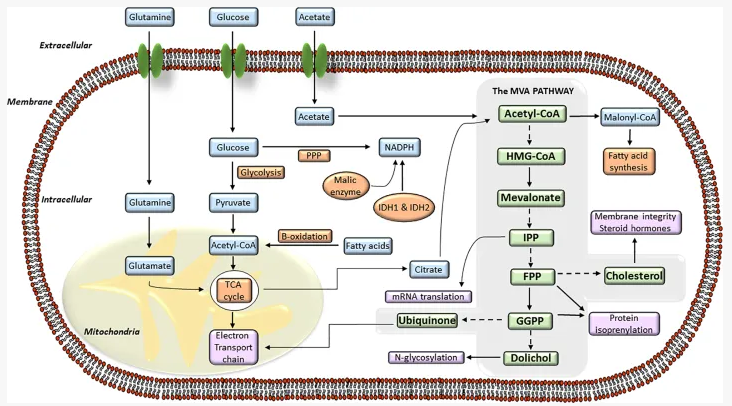
What I have learned to date is that you never, EVER want to lower cholesterol. Cholesterol is an anti-inflammatory compound that is needed to patch vessel wall damage in the body. The brain represents approximately 2% of total body weight, yet it contains about 20% to 25% of the body’s cholesterol, making it the most cholesterol-rich organ in the human body. This concentrated supply is required to maintain myelin sheaths, preserve neuronal membrane integrity, and support normal synaptic signalling. [13] Lowering it is a fool’s journey.
Statins Deplete CoenzymeQ10
What I found infuriating was that statins are well documented to reduce circulating CoQ10, an essential cofactor in mitochondrial energy production [14]. Every patient who came to me while taking a statin had been left uninformed about this depletion, and none had been advised to replace what the drug was lowering. CoQ10 is especially important to cardiac muscle because your heart has exceptionally high energy requirements. Clinical research has also shown that CoQ10 supplementation reduced major adverse cardiovascular events and cardiovascular mortality in patients with chronic heart failure [15]. Physicians routinely frighten patients into long-term statin use while presenting the evidence as settled and universally applicable. The scientific support for such widespread prescribing is far narrower than patients are led to believe. (I would argue this issue pertains to all suppressive allopathic interventions.)
An updated meta-analysis pooled 12 randomised controlled trials involving 1,776 participants and confirmed a significant reduction in circulating CoQ10 during statin treatment. The reduction appeared across different statin classes and prescribing intensities [14]. This is a reproducible biochemical effect that deserves direct discussion with every patient before treatment begins, AND IT’S NOT HAPPENING. Wait until you see the numbers of just how many people are taking these poisons. I nearly fainted.
The Q-SYMBIO trial followed 420 patients with moderate to severe chronic heart failure for two years. Major adverse cardiovascular events occurred in 15% of the patients receiving CoQ10 and 26% of those receiving placebo. Cardiovascular mortality was 9% in the CoQ10 group and 16% in the placebo group. All-cause mortality was also lower among those receiving CoQ10 [15]. These findings establish the clinical importance of a nutrient that statin drugs extensively drain. Ask your doctor today about the statin you are taking and whether they are informed about nutrient losses. “Hey Doc, why didn’t you prescribe CoQ10?”
The limits of widespread statin prescribing are also visible in trials involving older adults. ALLHAT-LLT included 10,355 participants with hypertension and moderately elevated LDL cholesterol. All-cause mortality and coronary heart disease event rates remained statistically similar between the pravastatin group and the usual-care group [16]. A later analysis focused on primary prevention in adults aged 65 years and older produced similar findings. Participants aged 75 years and older showed a nonsignificant increase in all-cause mortality while taking pravastatin [17].
Any cholesterol measurement requires a full interpretation, taking into account the complete cardiovascular and metabolic status before a lifelong drug is prescribed. See my video called “You Need to be on This Drug for Life”…and Other Stories. The decision must account for your existing cardiovascular disease and the absolute reduction in risk that treatment is expected to provide. You also deserve full disclosure about the depletion of CoQ10 and its importance to mitochondrial energy production in your heart and skeletal muscles.
Other Nutrients Affected by Statins
Statin treatment has also been associated with lower measured plasma vitamin E, although vitamin E travels within lipoproteins and part of this reduction occurs as LDL carriers decline [28]. Vitamin E is a fat-soluble antioxidant that protects lipids within cell membranes and circulating lipoproteins from oxidative damage. This gives it an important role in cardiovascular protection, especially within vascular tissue and cardiac muscle.
Statin users have shown impaired vitamin K-dependent protein activity, including elevated undercarboxylated osteocalcin, a marker of reduced vitamin K status that was associated with greater coronary calcification [29]. One of the roles of vitamin K is as a shuttle for calcium. Ironic, eh? How can a statin prevent a heart blockage by reducing heart support and the very thing that prevents calcium build-up along artery walls? Make it make sense.
Patients experiencing statin-associated muscle symptoms have also demonstrated reduced carnitine and acylcarnitines, along with altered amino-acid metabolism and impaired mitochondrial fatty-acid utilisation [30]. Statins cause muscle pain and weakness, cramping and stiffness, while reducing recovery after exertion. Oh, and a more permanent rhabdomyolysis, too.
The Enormous Scale of Statin Use
Statins have become one of the most extensively consumed drug classes in the world. A pharmaceutical sales analysis covering 83 countries estimated that 145.8 million people were taking statins in 2018. The countries included in the study represented approximately 74% of the world population. This was equivalent to about one statin user for every 38 people across the populations studied [18]. OMFG what are we DOING?!
Statin consumption continued to increase during the study period. From 2013 through 2018, worldwide statin use within the participating countries increased at an average annual rate of 3.99% [18]. A comparable international count has yet to be published for the years that followed, so the current worldwide number remains unknown. The documented rate of growth shows that 145.8 million represents an earlier measurement within an expanding market.
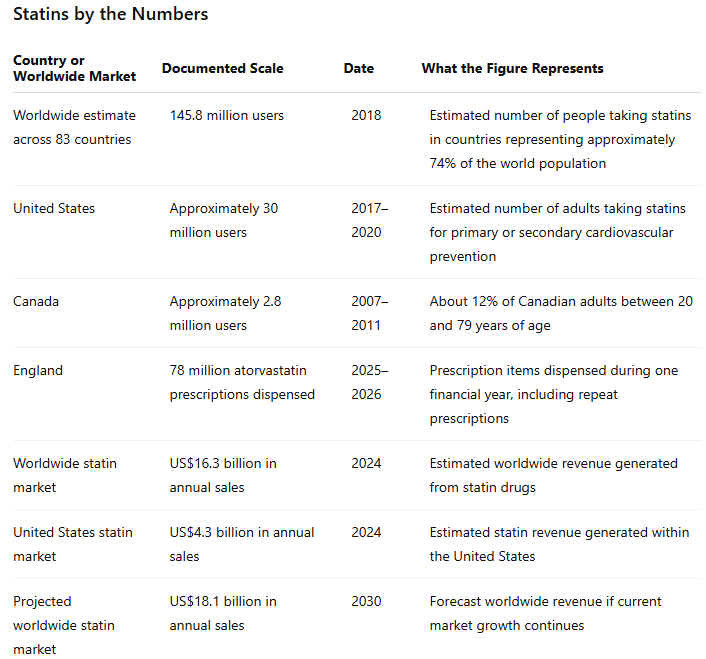
The United States alone had approximately 30 million people taking statins in the 2017–2020 National Health and Nutrition Examination Survey period [19]. In Canada, an estimated 2.8 million adults were already receiving statins between 2007 and 2011, which represented approximately 12% of Canadians aged 20 to 79 [20]. These Canadian figures are older, and present-day use is likely greater.
The prescribing volume in England provides a more recent indication of scale. During the 2025–2026 financial year, 78 million atorvastatin prescription items were dispensed through community pharmacies. Atorvastatin was the most frequently dispensed chemical substance in the country [21]. Prescription items measure dispensing volume, so this number represents repeat prescriptions throughout the year and doesn’t mean 78 million separate patients.
The commercial value of this drug class is equally substantial. A worldwide pharmaceutical market report valued statin sales at US$16.3 billion in 2024, including an estimated US$4.3 billion in the United States alone. The same report projects worldwide statin revenue of US$18.1 billion by 2030 [22]. Consolidated net profit remains unavailable because the market is distributed among numerous branded and generic manufacturers, but this ain’t no chump change.
What I find alarming is the sheer number of people exposed to long-term interference with the mevalonate pathway, frequently without a full explanation of CoQ10 losses or the physiological importance of cholesterol. By 2018, the international dataset already contained more than 145 million statin users, and the commercial market was generating approximately US$16 billion annually by 2024. These are no longer drugs reserved for a small group of patients with established cardiovascular disease. Statins have become a massive worldwide industry built upon continuous prescribing, repeat dispensing, and the progressive expansion of treatment eligibility. Healthcare? Whaddya talking about? Marketing and sales…that’s what this is, oh and a bonus for the eugenics-hungry death cult.
These drug companies are making it rain while digging your grave. Mad yet?
Higher Cholesterol Is Associated with Longer Life in Older Adults
Do you want to live long and prosper? Then never lower your cholesterol levels. Research involving elderly and very elderly adults has repeatedly found that low cholesterol is associated with a higher risk of death, while higher cholesterol is associated with greater longevity.
A ten-year study published in The Lancet followed 724 adults aged 85 years and older, with a median age of 89. During the follow-up period, 642 participants died. Each 1 mmol/L increase in total cholesterol was associated with a 15% reduction in the risk of death. Cardiovascular mortality remained similar across the low, intermediate, and high cholesterol groups. Participants with the highest cholesterol experienced significantly fewer deaths from cancer and causes classified as “infectious disease” (no such thing), which accounted for much of their lower overall mortality. The researchers concluded that high total cholesterol was associated with longevity in adults over the age of 85 [23].
The Honolulu Heart Program produced similar findings. Researchers measured cholesterol in 3,572 Japanese-American men aged 71 to 93 years and examined the relationship between cholesterol patterns and mortality over 20 years. The men in the lowest cholesterol quartile had the highest age-adjusted mortality rate. Men whose cholesterol remained low during two separate examinations had a 64% greater risk of death compared with the remaining participants. The researchers questioned the scientific justification for reducing cholesterol below 4.65 mmol/L in elderly adults [24]. If you deplete your anti-inflammatory wound patch substance, expect problems.
So, in older adults, very low cholesterol is associated with a substantially higher risk of death. Age changes lipid metabolism, while nutritional condition influences cholesterol production and utilisation. Your liver regulates cholesterol synthesis and metabolism, and your endocrine organs require cholesterol to manufacture steroid hormones. Existing disease and medication use further influence the meaning of your laboratory results and long-term health outcomes. Cholesterol forms an essential part of your cell membranes and myelin. Your body also requires it for bile acid synthesis and hormone production. A single laboratory value is bogus, as it captures only one aspect of its extensive physiological function and importance.
Here is my original 2007 article:
“I am seeing clients now who are on various drug therapies, and I have been concerned with the sheer amount of statins that people are taking, some on very high doses. At this point, I still fail to understand how correlated the dangers of high cholesterol and mortality from cardiac disease are. Is this theory sound? Are we seeing fewer cardiovascular accidents or death in general when people have their cholesterol controlled with statins (hydroxymethylglutaryl-coenzyme A reductase inhibitors)? My question is, “Are the studies showing decreased morbidity and mortality rates with patients on statin drug therapy (for dyslipidemia in the prevention of cardiovascular accidents)?
The searching MeSH terms were: statins, side-effects, morbidity, mortality, all-cause mortality & dyslipidemia. The Lancet and JAMA were helpful, and I found MANY articles. There were too many articles coming up for diabetic treatment, which I didn’t want so many of, so I used these words together: dyslipidemia, morbidity, statin, and found the best amount of studies in all varieties. Alt Health Watch and Medline were used, as well as a few other smaller journals using the LRC database.
Even though I wasn’t interested in many studies involving diabetics, one caught my eye (1). It was a European case-controlled study, well executed and substantial enough in numbers, that showed an increased risk for polyneuropathy when diabetics are using statins. Another study (2) postulated that statins ‘may affect adversely the muscle’s ability to appropriately respond to physical exertion’, a nasty side effect which worsens during physical activity. It appears that muscle complaints are among the morbidity seen in patients taking statins.
A prospective observational study in the UK (3) investigated erectile dysfunction (ED) in males on statin drug therapy and deduced it was higher because of ‘severe endothelial dysfunction’ due to cardiovascular risk factors such as age, smoking and diabetes. This is interesting because the therapy is meant to reduce arterial blockage and so produce better blood flow: it should therefore reduce ED, not increase it. So why should patients with atherosclerosis of the penile vasculature become worse off when taking statins? The study seemed to have a challenging time finding out. It didn’t seem to be able to come to a concrete answer in the results; however, they ended up saying that it must be diet and lifestyle choices; it couldn’t be the statin! I found this study to be incredibly biased. The researchers assumed that since there were some studies done that found measurements in brachial and coronary arteries to improve on some of the drugs, that statins obviously work the way we always thought they did, and so it must be something else causing the ED. This was a study showing obvious statin assumption.
I found many valuable studies showing that, in women and elderly persons, there are no or limited total mortality benefits. One JAMA meta-analysis (4) took 13 studies from1966 through December 2003 and found that lipid lowering does not affect total or CHD mortality or total mortality in women and may reduce CHD events only slightly (inconclusive in its evidence, however). And in the PROSPER study (5), it was found that elderly patients on 40 mg pravastatin had a decline in blood velocity and wall shear stress compared to placebo; however, there was no change in mortality. I love how they title this piece of research: “Pravastatin Decreases Wall Shear Stress and Blood Velocity in the Internal Carotid Artery Without Affecting Flow Volume: Results From the PROSPER MRI Study.” Sounds great, doesn’t it? Too bad this decline doesn’t prevent people from dying! Talk about missing the forest for the trees. Being that the American Heart Association is a front for Big Pharma (like most disease associations), I am not shocked to see studies presented in such a misleading manner like this one.
So far it seems that the studies are not showing decreased rates of morbidity and mortality with patients on statin drug therapy. Now I am curious about how high the rates do go.
Upon examining this 28-year study below, known as the Helsinki Businessmen Study (6)(7), it can be seen that the “intervention” group in the chart below was given cholesterol-lowering drugs and diets; the control group received no such intervention. This study proved that the use of cholesterol-lowering drugs and diets is risky!
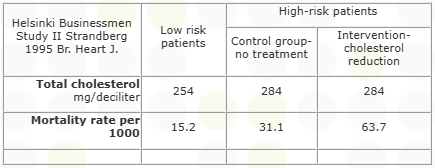
This is a well-done study, with solid methodology. It was trying to find out how dangerous it is to lower body cholesterol and what the outcomes are over a long-term basis on quality of life, specifically in the elderly. So it seems that not only do statins have very little effectiveness on preventing death and disease while giving many side effects, but lowering cholesterol increases mortality too?
It is interesting to note that even Dr. John Abramson, of Harvard Medical School, in his Lancet article titled “Are Lipid-Lowering Guidelines Evidence-Based?” (8) says that lowering cholesterol in otherwise healthy adults should not be done, and he calls for cholesterol treatment guidelines to be revised.
In a paper that needed to be translated in World Review Nutrition Dietetics, Dr. Harumi Okuyama of Nagoya City University in Japan, states that higher total cholesterol levels are closely correlated with lower cancer and all-cause mortality rates (9). He says that Western countries have accepted the cholesterol theory of heart disease and the use of statin drugs; “little benefit seems to result from efforts to limit dietary cholesterol intake or to total cholesterol values to less than approximately 260 mg/decliter.” He sends a warning that the direction of medical practice needs to move away from cholesterol-controlling medications.
I continue to find even more negatives to statin drugs. There are also questions regarding the negative effects of cell-mediated immunity from statins. This may be causing negative clinical cancer outcomes (10). Yet another study (11), this one is a double blind randomized controlled trial using 102 patients with calcific aortic stenosis and coronary artery calcifications. The researchers found that calcium plaque formation continues to accumulate even with aggressive interventions to reduce cholesterol (using atorvastatin 80 mg daily). So obviously it’s not the excess cholesterol that is causing the real problem; it could be the high inflammatory state of the body, the cleansing system not functioning properly, the body overcalcified, and poisoned from a toxic lifestyle! I’d say magnesium and omega 3s would play a much better role than any statin drug ever could.
It seems to be common theory to assume that higher levels of HDL and lower levels of LDL are cardioprotective, and the goal for most doctors (including many naturopaths) is to toy with these ratios. Well, consider this single-blind, placebo-controlled study (12) using the new drug torcetrapib, a drug that raises HDL cholesterol and lowers LDL. In the study, torcetrapib (a cholesteryl ester transfer protein (CETP) inhibitor) increased HDL levels by 46%, and when combined with a statin drug, they increased to 61%. Therefore, in a dual-day treatment protocol, HDL cholesterol is raised by 106%! LDL amounts were reduced by 17%. It was already ready to be released into the market; there were already articles written and published on how wonderful this drug is, when the manufacturer reported more deaths and strokes among users than placebos! Oops, people were dying from high HDL and low LDL!
I think it is time to take a step back and rethink the theories and pay attention to the vested interests of those parties supporting certain medical theories and ‘corrective’ drugs. Perhaps the lower ‘bad’ cholesterol and increased ‘good’ cholesterol is a symptom of the correction on a deeper level, and changing these ratios with drugs doesn’t do the trick because it’s changing a superficial sign. Perhaps why vitamin C, magnesium and CoQ10 work is because they are regulating many processes and not merely changing a ratio.”
This was part of my original article, but I have expanded upon it:
A conventional cholesterol measurement fails to identify many patients who develop coronary artery disease or experience a heart attack. In a study of younger adults admitted to hospital with acute myocardial infarction who were not taking statins, 68% had LDL cholesterol levels of 130 mg/dL or lower. Twenty-nine percent had LDL levels of 100 mg/dL or lower, while only 14% had LDL cholesterol of 160 mg/dL or higher. These findings demonstrate that a heart attack can occur when LDL cholesterol falls within ranges commonly described as acceptable or optimal [25].
This pattern has also been documented in a much larger hospital population. An analysis of 136,905 hospitalisations for coronary artery disease found that almost half of the patients had admission LDL cholesterol below 100 mg/dL. A further 17.6% had LDL cholesterol below 70 mg/dL. These findings show that an elevated LDL measurement alone provides an incomplete assessment of coronary disease [26].
Coronary calcification can also be extensive in patients who lack the conventional cardiovascular risk factors used to predict arterial disease. In the Rotterdam Coronary Calcification Study, researchers examined 2,013 adults aged 55 years and older. Coronary calcium was measured using the Agatston scoring method. Blood pressure and cholesterol were assessed seven years before the scan and again at the time of scanning. Researchers also recorded smoking status, blood sugar and other recognised cardiovascular risk factors. Among asymptomatic participants without the measured risk factors, 29% of the men and 15% of the women still had high coronary calcium scores [27].
Blood and Arterial Support Protocol
If you have been told that your arteries are blocked, obtain a copy of the imaging report and identify the artery involved, the location of the plaque, and the specific, measured percentage of narrowing. These details determine the seriousness of the finding and provide a baseline for future comparison. Make sure you ALWAYS get copies of any medical records and diagnoses.
My following protocol can be used for active disease or for prevention and supports improved circulation, refined vascular tone and function, blood-pressure regulation, and the nutritional requirements of cardiac muscle.
Strauss Heart Drops contain aged garlic, hawthorn, motherwort, cayenne, European mistletoe, bilberry and white willow. The formula supports cardiovascular function, vascular tone and healthy circulation.
Hibiscus Flower and Chia Seed Infusion
Fill a large mason jar with pure room-temperature water. Add two tablespoons of dried hibiscus flowers and allow the infusion to sit for four hours. Strain out the flowers. Add two tablespoons of chia seeds and stir several times thoroughly so the seeds remain evenly dispersed. Allow the mixture to sit for another 20 to 30 minutes.
Drink the infusion gradually throughout the day. Chew some of the hydrated chia seeds to improve access to their protein and fatty acids. Prepare several jars at once and store them in the refrigerator.
Hibiscus supports healthy vascular tone and blood-pressure regulation. Chia provides soluble fibre and alpha-linolenic acid while its hydrated mucilage supports bowel elimination.
50% DMSO with Natural Magnesium
Apply a light layer over the upper chest and upper back once or twice daily on clean, unbroken skin. Allow the area to dry completely before covering it with clothing.
The skin must be free from perfume, moisturiser, sunscreen and other topical substances before application. DMSO increases dermal penetration and carries substances present on the skin into deeper tissues. DMSO assists vessel repair and blood flow. Learn all about DMSO here. Get the purest DMSO in the world here.
Magnesium participates in cardiac electrical conduction, vascular smooth-muscle regulation and energy production. It also supports normal muscular relaxation throughout the cardiovascular system. It’s a major enzyme catalyst involved in hundreds of vital actions.
Choose Your Preferred Omega-3 Product
Use one of the following omega-3 preparations as the primary fatty-acid component of the protocol.
Option One: AUUM Sublingual-D
Take 2.5 mL twice daily. Hold it under your tongue for 60 to 90 seconds before swallowing. Shake the bottle before measuring each serving and refrigerate it after opening.
Each 2.5 mL serving supplies EPA, DHA and DPA from harp seal oil, together with vitamin D3. DPA expands the range of long-chain omega-3 fatty acids available for vascular membranes and lipid-mediator production.
Option Two: New Roots Omega Jolly
Begin with one softgel daily with food. Work up to two softgels daily once you are used to it. Each softgel supplies 650 mg of EPA and 100 mg of DHA from anchovy and sardine oil. The product label permits one to four softgels daily.
Monitoring
Measure your blood pressure and pulse each morning and evening during the first several weeks. Hibiscus, hawthorn, and motherwort influence vascular tone, so your readings can provide important information about your responses.
If you are still attending a quack and haven’t yet joined Yummy.Doctor where I teach you how to doctor yourself, repeat your cardiovascular blood work after approximately 12 weeks. Include a complete lipid panel with triglycerides. Measure ApoB and lipoprotein(a) when available. Fasting insulin and glycated haemoglobin provide information about glucose regulation, which strongly influences vascular injury and plaque development.
Repeat the original imaging according to the seriousness and location of the arterial narrowing. Blood tests cannot show whether an established plaque has changed in size or structure. Then heal yourself and hand the results to your doctor; poor things need some education.
Important Interaction Considerations
Strauss Heart Drops contain aged garlic and white willow. These ingredients require careful review when you take anticoagulant or antiplatelet medication. Omega-3 oils also influence platelet activity. Upcoming surgery requires a specific discontinuation plan. Always start a new treatment protocol at a low dose and work up to a therapeutic dose, and start one supplement at a time. Keep a health journal.
Blood-pressure medication requires close monitoring because DMSO, magnesium, hibiscus, hawthorn, and motherwort can further reduce vascular pressure. It is best to start cutting down on hypertension medications before beginning. Overmedication looks like: dizziness, faintness, unusual bleeding, new chest pain, breathlessness, or neurological changes.
Always slowly reduce blood-pressure medications; however, statins can be immediately halted. Please properly dispose of all medical drug poisons; never flush them or throw them in the regular garbage. Most pharmacists will properly dispose of them for you.
If you have hypertension, I have a 3-part series for you:
Part 1 discusses the functions of the blood.
Part 2 discusses the mechanisms of blood pressure control.
Part 3 discusses the remedies that can be used to heal the root cause of the blood pressure problem.
Oh and…fuck big pharma!
Love, ADV
Source:
[1] D. Gaist, U. Jeppesen, M. Andersen, L. A. García Rodríguez, J. Hallas, and S. H. Sindrup, “Statins and risk of polyneuropathy: a case-control study,” Neurology, vol. 58, no. 9, 2002, pp. 1333–1337. doi: 10.1212/WNL.58.9.1333.
[2] P. D. Thompson, P. Clarkson, and R. H. Karas, “Statin-associated myopathy,” JAMA, vol. 289, no. 13, 2003, pp. 1681–1690. doi: 10.1001/jama.289.13.1681.
[3] H. Solomon, Y. P. Samarasinghe, M. D. Feher, J. Man, H. Rivas-Toro, P. J. Lumb, A. S. Wierzbicki, and G. Jackson, “Erectile dysfunction and statin treatment in high cardiovascular risk patients,” International Journal of Clinical Practice, vol. 60, no. 2, 2006, pp. 141–145. doi: 10.1111/j.1742-1241.2006.00793.x.
[4] J. M. E. Walsh and M. Pignone, “Drug treatment of hyperlipidemia in women,” JAMA, vol. 291, no. 18, 2004, pp. 2243–2252. doi: 10.1001/jama.291.18.2243.
[5] J. Shepherd, G. J. Blauw, M. B. Murphy, et al., “Pravastatin in elderly individuals at risk of vascular disease (PROSPER): a randomised controlled trial,” The Lancet, vol. 360, no. 9346, 2002, pp. 1623–1630. doi: 10.1016/S0140-6736(02)11600-X.
[6] T. E. Strandberg, V. V. Salomaa, H. T. Vanhanen, V. A. Naukkarinen, S. J. Sarna, and T. A. Miettinen, “Mortality in participants and non-participants of a multifactorial prevention study of cardiovascular diseases: a 28-year follow-up of the Helsinki Businessmen Study,” British Heart Journal, vol. 74, no. 4, 1995, pp. 449–454. doi: 10.1136/hrt.74.4.449.
[7] T. E. Strandberg, A. Strandberg, K. Rantanen, V. V. Salomaa, K. Pitkälä, and T. A. Miettinen, “Low cholesterol, mortality, and quality of life in old age during a 39-year follow-up,” Journal of the American College of Cardiology, vol. 44, no. 5, 2004, pp. 1002–1008. doi: 10.1016/j.jacc.2004.04.057.
[8] J. Abramson and J. M. Wright, “Are lipid-lowering guidelines evidence-based?,” The Lancet, vol. 369, no. 9557, 2007, pp. 168–169. doi: 10.1016/S0140-6736(07)60084-1.
[9] H. Okuyama, Y. Ichikawa, Y. Sun, T. Hamazaki, and W. E. M. Lands, “The cholesterol hypothesis: its basis and its faults,” World Review of Nutrition and Dietetics, vol. 96, 2007, pp. 1–17. doi: 10.1159/000097802.
[10] L. Mascitelli and F. Pezzetta, “Statin treatment, reduced T-cell content of atherosclerotic plaques and cancer,” Journal of Internal Medicine, vol. 260, no. 6, 2006, pp. 592–593. This publication is a letter to the editor, not an original clinical study.
[11] E. S. Houslay, S. J. Cowell, R. J. Prescott, J. Reid, J. Burton, D. B. Northridge, N. A. Boon, and D. E. Newby, “Progressive coronary calcification despite intensive lipid-lowering treatment: a randomised controlled trial,” Heart, vol. 92, no. 9, 2006, pp. 1207–1212. doi: 10.1136/hrt.2005.080929.
[12] M. E. Brousseau, E. J. Schaefer, M. L. Wolfe, L. T. Bloedon, A. G. Digenio, R. W. Clark, J. P. Mancuso, and D. J. Rader, “Effects of an inhibitor of cholesteryl ester transfer protein on HDL cholesterol,” The New England Journal of Medicine, vol. 350, no. 15, 2004, pp. 1505–1515. doi: 10.1056/NEJMoa031766.
[13] Y. Wang, K. Karu, and W. J. Griffiths, “Analysis of neurosterols and neurosteroids by mass spectrometry,” Biochimie, vol. 89, no. 2, 2007, pp. 182–191.
[14] H. Qu, Y.-Y. Meng, H. Chai, F. Liang, J.-Y. Zhang, Z.-Y. Gao, and D.-Z. Shi, “The effect of statin treatment on circulating coenzyme Q10 concentrations: an updated meta-analysis of randomized controlled trials,” European Journal of Medical Research, vol. 23, 2018, article 57. doi: 10.1186/s40001-018-0353-6.
[15] S. A. Mortensen, F. Rosenfeldt, A. Kumar, et al., “The effect of coenzyme Q10 on morbidity and mortality in chronic heart failure: results from Q-SYMBIO, a randomized double-blind trial,” JACC: Heart Failure, vol. 2, no. 6, 2014, pp. 641–649. doi: 10.1016/j.jchf.2014.06.008.
[16] ALLHAT Officers and Coordinators for the ALLHAT Collaborative Research Group, “Major outcomes in moderately hypercholesterolemic, hypertensive patients randomized to pravastatin versus usual care: The Antihypertensive and Lipid-Lowering Treatment to Prevent Heart Attack Trial,” JAMA, vol. 288, no. 23, 2002, pp. 2998–3007. doi: 10.1001/jama.288.23.2998.
[17] B. H. Han, D. Sutin, J. D. Williamson, et al., “Effect of statin treatment versus usual care on primary cardiovascular prevention among older adults: The ALLHAT-LLT randomized clinical trial,” JAMA Internal Medicine, vol. 177, no. 7, 2017, pp. 955–965. doi: 10.1001/jamainternmed.2017.1442.
[18] J. E. Blais, Y. Wei, K. K. W. Yap, et al., “Trends in lipid-modifying agent use in 83 countries,” Atherosclerosis, vol. 328, 2021, pp. 44–51. doi: 10.1016/j.atherosclerosis.2021.05.016.
[19] M. D. Chobufo, S. R. Regner, I. Zeb, J. L. Lacoste, S. S. Virani, and S. Balla, “Burden and predictors of statin use in primary and secondary prevention of atherosclerotic vascular disease in the US: from the National Health and Nutrition Examination Survey 2017–2020,” European Journal of Preventive Cardiology, vol. 29, no. 14, 2022, pp. 1830–1838. doi: 10.1093/eurjpc/zwac103.
[20] D. A. Hennessy, P. Tanuseputro, M. Tuna, et al., “Population health impact of statin treatment in Canada,” Health Reports, Statistics Canada, vol. 27, no. 1, 2016, pp. 20–28.
[21] NHS Business Services Authority, “Prescription Cost Analysis: England 2025/26,” published 4 June 2026.
[22] Market Glass, Inc., “Statins: Global Strategic Business Report,” Research and Markets, July 2026.
[23] A. W. Weverling-Rijnsburger, G. J. Blauw, A. M. Lagaay, D. L. Knook, A. E. Meinders, and R. G. Westendorp, “Total cholesterol and risk of mortality in the oldest old,” The Lancet, vol. 350, no. 9085, 1997, pp. 1119–1123. doi: 10.1016/S0140-6736(97)04430-9.
[24] I. J. Schatz, K. Masaki, K. Yano, R. Chen, B. L. Rodriguez, and J. D. Curb, “Cholesterol and all-cause mortality in elderly people from the Honolulu Heart Program: a cohort study,” The Lancet, vol. 358, no. 9279, 2001, pp. 351–355. doi: 10.1016/S0140-6736(01)05553-2.
[25] K. O. Akosah, R. M. Cerniglia, P. Havlik, and A. Schaper, “Myocardial infarction in young adults with low-density lipoprotein cholesterol levels ≤100 mg/dL: clinical profile and 1-year outcomes,” Chest, vol. 120, no. 6, 2001, pp. 1953–1958. doi: 10.1378/chest.120.6.1953.
[26] A. Sachdeva, C. P. Cannon, P. C. Deedwania, et al., “Lipid levels in patients hospitalized with coronary artery disease: an analysis of 136,905 hospitalizations in Get With The Guidelines,” American Heart Journal, vol. 157, no. 1, 2009, pp. 111–117.e2. doi: 10.1016/j.ahj.2008.08.010.
[27] H. H. S. Oei, R. Vliegenthart, A. Hofman, M. Oudkerk, and J. C. M. Witteman, “Risk factors for coronary calcification in older subjects: The Rotterdam Coronary Calcification Study,” European Heart Journal, vol. 25, no. 1, 2004, pp. 48–55. doi: 10.1016/j.ehj.2003.10.008.
[28] D. M. Colquhoun, R. Jackson, M. Walters, et al., “Effects of simvastatin on blood lipids, vitamin E, coenzyme Q10 levels and left ventricular function in humans,” European Journal of Clinical Investigation, vol. 35, no. 4, 2005, pp. 251–258. doi: 10.1111/j.1365-2362.2005.01486.x.
[29] M. D. Zhelyazkova-Savova, Y. T. Yotov, M. N. Nikolova, et al., “Statins, vascular calcification, and vitamin K-dependent proteins: Is there a relation?,” The Kaohsiung Journal of Medical Sciences, vol. 37, no. 7, 2021, pp. 624–631. doi: 10.1002/kjm2.12373.
[30] T. J. Garrett, M. A. Puchowicz, E. A. Park, et al., “Effect of statin treatment on metabolites, lipids and prostanoids in patients with statin-associated muscle symptoms,” PLOS ONE, vol. 18, no. 12, 2023, article e0294498. doi: 10.1371/journal.pone.0294498.
Other Sources Consulted
Sepp Hasslberger, “Vitamin C Beats Statins in Cholesterol, Heart Disease,” New Media Explorer, 9 November 2003. The original webpage no longer loads reliably. This is a web article, not a peer-reviewed study.
Owen R. Fonorow, “CoQ10 and Statins: The Vitamin C Connection,” Vitamin C Foundation, 2003. This page is an accessible republication of the original essay. It is an opinion article, not a clinical study.
M. H. Criqui and B. A. Golomb, “Low and lowered cholesterol and total mortality,” Journal of the American College of Cardiology, vol. 44, no. 5, 2004, pp. 1009–1010. doi: 10.1016/j.jacc.2004.06.022. This is an editorial accompanying the Strandberg study.
Heart Protection Study Collaborative Group, “MRC/BHF Heart Protection Study of cholesterol lowering with simvastatin in 20,536 high-risk individuals: a randomised placebo-controlled trial,” The Lancet, vol. 360, no. 9326, 2002, pp. 7–22. doi: 10.1016/S0140-6736(02)09327-3.

Join Amandha’s Private Community!
Participate in specific health related groups, engage with holistic healers, educate yourself with step-by-step online courses, join Amandha in weekly video chats, and reach the ultimate natural health lifestyle.

Amandha D Vollmer
BSc, Herbalist, Reiki Master,
Holistic Health Practitioner,
Degree of Doctor of Naturopathic Medicine
About Amandha Vollmer (ADV):
Amandha Vollmer (ADV) is the author of Healing with DMSO and a holistic health educator whose work explores natural health, DMSO, self-care and health sovereignty.
Websites:
Bringing the Wisdom of Nature Education: https://yummy.doctor/
YumNaturals Emporium Store: https://yumnaturals.store/
DMSO Products: https://DMSO.store
Healing with DMSO Book: https://healingwithdmso.com/
Support my Work by Making a Donation:
YUM BTC (Bitcoin) – bc1qayv9rjzlpc8hlc0t5d80le8u0g72f5p75570hz
YUM ETH (Ethereum) – 0xD4AE2Ae316435e4e68DC0c5D2131c2252fD9B0c4
https://yumnaturals.store/product/general-fee-or-donation/
https://www.patreon.com/yumnaturals
Telegram Chats:
1. ADV’s Main Channel: https://t.me/amandhavollmer
2. ADV’s Legal/Lawful Templates Group: https://t.me/HDoT_Templates
3. ADV’s Local Ontario Group: https://t.me/ontarioawake
Educational Disclaimer:
Yummy.Doctor content is provided for educational and informational purposes and is not a substitute for individualized medical, legal or financial advice. See our full Disclaimer & Waiver.
Advice Disclaimer:
The website content, including but not limited to blogs, newsletters and videos with Amandha Vollmer are intended for general information only, and are not intended to be a substitute for legal, medical or financial advice, and should not be construed as legal, medical or financial advice applicable to your particular situation. No attorney-client or confidential relationship is or will be formed by use of this website or the contents within.