
Learning About DMSO: A Beginner Class with Amandha Vollmer (ADV)
Healing with DMSO: Amandha Vollmer (ADV) & Tom Barnett
DMSO for Beginners: Video Overview
In this DMSO for beginners class, Amandha Vollmer (ADV), author of Healing with DMSO, introduces dimethyl sulfoxide (DMSO), how she first encountered it, its tree- and pulp-industry origins, early DMSO history, basic sulfur chemistry, and the properties she says make it unusual as a transdermal solvent and carrier.
Amandha moves through her interpretation of DMSO research and practical applications, including pain and inflammation, circulation, tissue and scar response, dilution and concentration, skin sensitivity, exothermic mixing, storage, and material compatibility. She also discusses combining DMSO with magnesium, aloe, herbs and other preparations, along with possible interactions with medications and alcohol.
The class goes beyond basic topical use into higher-risk topics including internal use, eye and ear applications, children, pets, serious medical conditions, head injuries, stroke and heart-attack scenarios. Throughout, Amandha connects DMSO to her broader terrain-based health philosophy, demonstrates products and blending concepts, and addresses selected audience questions while noting that additional questions will be saved for future sessions.
What You’ll Learn About DMSO
- What DMSO (dimethyl sulfoxide) is, where it comes from, and how its early history is discussed
- How Amandha describes DMSO’s transdermal solvent and carrier properties and its relationship with water
- Perspectives presented on pain, inflammation, circulation, tissue response and scar tissue
- DMSO concentrations and dilution ranges discussed for topical, sensitive and higher-risk applications
- Skin cleanliness, test patches, sweating, material compatibility and exothermic mixing considerations
- Potential interactions with prescription medications, alcohol, Botox and other substances discussed in the class
- Discussion of internal use, eye and ear applications, children, pets, head injuries and emergency scenarios
- How Amandha combines DMSO with magnesium, aloe and herbal preparations, plus practical audience questions
Important Context & Safety
Educational context: This video presents Amandha Vollmer’s perspectives, personal experience, protocols and interpretation of DMSO research. It includes therapeutic claims and applications with different levels of clinical evidence and regulatory acceptance, including internal use, eye and ear use, use with children and pets, and discussion of serious medical conditions.
The class discusses DMSO as a strong solvent and transdermal carrier, so concentration, clean skin, test patches, mixing heat and material compatibility are important topics in the presentation. The video also discusses prescription medications, alcohol, chemotherapy, Botox and other substances. Do not stop, taper, replace or otherwise change a prescribed medication based on this video; discuss possible interactions and higher-risk DMSO use with an appropriately qualified clinician or pharmacist. Internal use, eye or ear application, IV or injection use, and use with children or pets warrant particular caution and professional guidance.
Emergency conditions: The video discusses DMSO in stroke, heart-attack, serious head-injury and other urgent scenarios. The video should not be used to delay or replace appropriate emergency assessment or treatment.
Full Video Transcript
Transcript note: This transcript has been lightly edited for punctuation, spelling, speaker names, and readability while preserving the speakers’ meaning, conversational tone, and sequence of discussion. Statements about health, research, products, or medical applications remain the speakers’ statements from the original recording and have not been independently verified or rewritten as medical advice.
Welcome, Class Format, and Amandha’s DMSO Story
Amandha: So welcome, everyone. We are full and people are waiting to get into this class. We’re going to do a little housekeeping. There are a few rules. Yes, we’re going to do some Q&A at the end. I’m probably going to be about two hours with you. Jessica is my co-host. Hi, Jessica. She’s going to be helping with the Q&A and gathering the questions and helping collate them, because we won’t be able to answer everything. She’s also going to be collecting questions for later so we can make sure everything gets answered for you. And also, no advertising, please. That will be an automatic boot because people are waiting in line to get in.
Amandha: We’re at 500 max. Right before seven o’clock, we already maxed out. We do have a poll. The poll says those of you who are new to DMSO are about 58 percent. People who are intermediate are about 40 percent, and we have about 2 percent advanced, so people who are already well versed. Maybe they have my book already. Maybe they’ve visited DMSO.store. Maybe they’ve used some of my products or blends that I’ve created over the years.
Amandha: We didn’t realize the demand was going to be so high for this knowledge, and it’s exciting because this is something I found out about back around 2016. My background is a Bachelor of Science in agricultural biology and a degree from the Canadian College of Naturopathic Medicine in Toronto. I graduated in 2008. I learned about DMSO just a little bit in naturopathic college, and it was in our sports-medicine class. It was basically, “What do we do for pain? DMSO.” That was it. I thought, “I’m not going to be doing sports medicine. Who cares?” It wasn’t something I was really thinking about at the time.
Amandha: Later, I was strolling through a health-food store. I had already opened my store, YumNaturals.Store, and I was already making blends. A lot of what I was focused on was mom, baby, family and helping people know how to take care of things at home. I thought, “I should have some of this DMSO in my store because what if somebody comes in with severe pain?” I had some remedies for pain, but DMSO seemed like a good thing to have on the shelf.
Amandha: One day I needed to use it, and I could not believe what happened. A lot of people jump into this remedy and find out the hard way how strong it is. I used a 90 percent solution, which is the one I had seen sold on shelves, and I put it all over my arms. Immediately I had itchiness, redness and tingling, and I could taste it in my mouth as soon as I put it on my skin. I said, “What is this voodoo? Excuse me.”
Amandha: I ended up doing a deep research session because I needed to know what was happening. I barely slept that night. I read about 50 studies, and I was blown away by what I was reading. I thought, “How did I not know about this?” I was excited and giddy about it. Within a day or two I made a video after consuming everything I could at the time, and that video went viral. I was pleased because my path is to help people, and I was pleased that people were finding out about it.
Amandha: Here we are in 2025, and more and more people are finding out about it. After that video, I started making blends because I have a science and chemistry background and I saw a lot of potential for combining DMSO with other substances. It is a carrier substance, and that is also one of the reasons people get scared about it. I understand being cautious, but fear is not required. Awareness is required. That is why you are here today: to learn how to use it properly, understand it, drop some of the fear and build confidence.
Amandha: After a couple of years, a publishing company reached out and asked me to write a book about DMSO. I said, “Absolutely.” Coming from a scholastic path and a nerdy science background, my first manuscript was extremely geeky. I submitted it and they basically said, “This is lovely, but we want it digestible for the everyday individual. Can you rewrite it in layperson’s terms and cut it by about half?” So I went back and simplified the language.
Amandha: I think that process made Healing with DMSO easy to read and manageable for people. The book has protocols, recipes and a dilution chart. We’re going to go through some of those dilution concepts today. It has been translated into multiple languages, and people tell me they keep it bookmarked and earmarked because they use it as a reference.
Amandha: I also have lots of public videos on Yummy.Doctor that are completely free, and private videos, courses and membership materials. If you watch different DMSO talks, they’re all a little different because I don’t want to repeat the same presentation endlessly. I’m always trying to get crisper, clearer and more pinpointed with the information as I go.
Amandha: I want you to have confidence when you’re using something like DMSO. I want you to understand, for example, that when you mix it with certain substances you can get an exothermic reaction. You should know what that is so you are not frightened by a normal heat-producing reaction. Jessica is going to help with questions and direct people in the chat. Please don’t raise your hand. If you type into the webinar chat, make sure the setting says everyone rather than just hosts and panelists.
Amandha: Yes, the recording will be available after. Great. Everybody can hear and see. We had hundreds of messages, so I’m not going to get through all of that right now. I’m glad you could join and I’m glad you could get in. People are looking for solutions, and I’m going to get into why I think DMSO is especially relevant to current health concerns later in the presentation.
Amandha: I’m going to share my screen now. Tell me if you can see the whole screen. All good? Great. Let’s rock on.
What DMSO Is: Origins, History, Chemistry, and MSM
Amandha: So what is DMSO? Dimethyl sulfoxide is a liquid. There are many other names for it because it is heavily used in science and research, including laboratory work and organ-preservation work. It is a powerful solvent, and the name can appear differently in different research literatures.
Amandha: DMSO comes from trees, generally pine. It is a naturally occurring organosulfur compound that is commonly recovered through the pulp-and-paper industry. It comes from lignin, which is part of the structural material of a tree. In industrial production, lignin is separated during paper processing, and DMSO can be recovered and purified from that stream.
Amandha: There is also a synthetic version. I refer to RIMSO-50 when I talk about the medical or laboratory form. MSM sulfur is a related compound. You may be more familiar with MSM. It is sometimes referred to as DMSO2 because it has an additional oxygen and is crystalline rather than liquid.
Amandha: DMSO was first synthesized by a Russian chemist in 1866. It sat around for a long time before modern researchers began to investigate it in depth. In the 1950s, Crown Zellerbach in Washington was working with it and exploring its solvent properties. Researchers noticed that it affected the way water froze, which was very interesting for preserving biological tissues.
Amandha: That leads into Stanley Jacob. He was doing research related to tissue preservation and organ transplantation. He became one of the major modern DMSO researchers. He and others investigated its cryoprotective properties because if you can cool tissue without destructive ice-crystal formation, that has obvious relevance to preserving viable tissue.
Amandha: There is a book called The Persecuted Drug: The Story of DMSO by Pat McGrady Sr. It tells the story of Stanley Jacob, the FDA and the people involved in the early DMSO controversy. It reads almost like a spy novel. It gives you a sense of the history and why the subject became so politically charged.
Amandha: Let’s look at the chemistry. DMSO has sulfur, oxygen and two methyl groups. Those methyl groups are part of why I describe the molecule as flexible and reactive. I talk a lot about methylation and tagging in the body. I connect methyl groups with biochemical processes that identify, move and process materials.
Amandha: If we put DMSO next to MSM, the important practical difference is that I describe DMSO as transdermal and a carrier, whereas MSM is not transdermal in the same way. MSM is something I use for tissue structure, hair, nails, skin and other support, but it does not have the same “grabby” carrier action that I use with DMSO blends.
Amandha: With DMSO, I might blend it with St. John’s wort, castor oil or iodine. The idea is that DMSO can surround smaller molecules and help carry them into tissues. MSM does not perform that same delivery role. Both supply sulfur-related chemistry, but they behave differently.
Amandha: DMSO has been studied for a very long time. When people ask whether it only affects one pathway, such as mitochondria, I say there are many actions. This is part of why I wrote the book: the subject is broad and the research history is much deeper than most people realize.
Amandha: One of the primary things people know is that DMSO penetrates the skin. In my book, I discuss three different ways it can interact with the skin barrier. Very few substances open the skin barrier in the same way. That is the beginning of understanding both the possibilities and the precautions.
Amandha: When I talk about the tree source, I am talking about lignin and the pulp-and-paper stream. The industrial process removes material from the wood, and then manufacturers who want DMSO have to purify it. That is why I keep returning to purity later in the class. The starting point may be an industrial stream, but the finished material can be purified to a pharmaceutical grade.
Amandha: The early modern history is fascinating to me. Crown Zellerbach was using it as a solvent and Robert Herschler became interested in what it could do. Stanley Jacob was working on organ and tissue preservation, and the story is that Herschler basically told him, “Stan, you have to look at this stuff.” Jacob then opened a laboratory, received funding and started doing a huge amount of work with DMSO.
Amandha: I call Stanley Jacob the modern godfather of DMSO because he laid so much of the groundwork. I never got to meet him before he died, but I have spoken with researchers who knew him personally. Hearing their stories about how curious he was and how much work he did is one reason I keep bringing people back to the older literature.
Amandha: On the slide I show the little sticks-and-balls version of the molecule. DMSO has sulfur, oxygen and two methyl groups. I describe the methyl groups as tagging groups. In my biochemical model, methylation helps the body identify what something is, where it needs to go and whether it needs to be processed or removed.
Amandha: I connect that discussion with MTHFR and folate chemistry because people hear the word methylation all the time without knowing what it means. My point is that the body needs ways to tag and move material. I am not saying the molecule is only doing one thing. It is a very small, flexible molecule and I think that is part of why it interacts with so many systems.
Amandha: MSM is related but behaves differently. MSM is crystalline and has the additional oxygen. I use MSM for hair, nails, skin, gut and tissue structure, and I talk about it in relation to glutathione and waste elimination. But it is not “grabby” and transdermal in the same way I use DMSO. If I want to carry St. John’s wort, castor oil, iodine or another small compound through the skin, DMSO is the one I am talking about.
Amandha: Both compounds contribute sulfur-related chemistry, oxygen and methyl groups, but they have different abilities for blending and delivery. That distinction matters because I do not want people thinking that taking MSM and using DMSO are exactly the same thing. They are cousins, not duplicates.
Transdermal Delivery, Pain, Inflammation, and Tissue Effects
Amandha: DMSO is famous as a pain reliever. I describe it as having analgesic and anti-inflammatory actions, but I also want people to understand that I do not look at it as simply suppressing a symptom. In my model, inflammation is part of the body’s effort to move materials into an injured area and remove wastes. DMSO changes transport and movement, so I view the reduction in inflammation as connected to improving that movement rather than just shutting down the signal.
Amandha: I’ve had people tell me they sprained an ankle and, in their prior experience, took months to recover. Then they used DMSO after a later sprain and felt they recovered dramatically faster. Those are individual reports, but they are part of why I became interested in it beyond just pain relief.
Amandha: When I use DMSO for pain, I like people to rate the symptom before and after. If pain is a ten out of ten, make an application and check again. Maybe it comes down to a nine or an eight. Then you can layer another application and check again. If it comes down to six, you have information. If within an hour or two you are at a two, you can see how your body is responding. I like rating scales because they make the process less vague.
Amandha: You can also layer complementary things. I talk about curcumin, omega-3 fats and other anti-inflammatory supports, and I combine topical DMSO with magnesium in some of my own products. Synergy is a big part of how I work with DMSO.
Amandha: I actually hurt my back around the time of this webinar. We had a lot of snow here in Ontario and it got heavy and wet. I overdid it. I woke up with a sore back, stretched, used magnesium and used one of my DMSO-magnesium products. I went to a chiropractic appointment, but I was still stiff. By the time I got home I was in a lot of pain and thought I might have to cancel the webinar.
Amandha: I started with my 30 percent aloe DMSO gel. Then I layered on my Peace Cream and later took a bath with magnesium salts. When I got out, I repeated the topical applications. I also used my Face Lift in a Jar, which contains DMSO. By the time I was teaching, I could sit and function again. I joked that webinar day had made me a live example of the muscle-relaxant and pain discussion.
Amandha: DMSO also has an interesting relationship with collagen and connective tissue. I describe it as helping collagen reorganize, which is why I use it in discussions of scars and keloids. People sometimes report old scars becoming softer or less prominent. I do not want people to put DMSO on a pedestal, though. Healing takes time and there are usually multiple factors.
Amandha: This is important because people can say, “I used it for a week and it didn’t magically fix my cataract or my scar.” I want you to be patient with your body and look at the whole health picture rather than expecting one substance to erase everything instantly. DMSO can be powerful, but it is not fair to turn it into a miracle pedestal.
Amandha: For anyone who uses Botox, I tell people not to combine fresh Botox treatment with DMSO in the same area. My position is that DMSO’s transport and detoxification actions can interfere with what you are trying to maintain with the Botox. I also have broader concerns about Botox, but the practical point in this class is: do not assume every substance should automatically be combined with DMSO.
Amandha: I also talk about connective-tissue conditions, blood flow and platelet aggregation. I describe DMSO as affecting circulation and vasodilation. That is one of the reasons medication interactions matter. If you are taking drugs that affect blood pressure, clotting or other systems, you need to understand that DMSO may change delivery and metabolism.
Amandha: This is one of my major cautions. I believe DMSO can increase drug delivery and can also alter how quickly the body processes drug metabolites. So if you are using prescription medication, do not just pretend that DMSO exists in a separate compartment. Read about the medication, know what it does and talk to someone who understands the medication. I often say a pharmacist may know more about the drug’s pharmacology than the average prescriber.
Amandha: I have strong opinions about long-term medication use and lifestyle change, and I talk about those opinions in this class. I also discuss chemotherapy and older DMSO research in which DMSO was combined with chemotherapy. I present that as an example of DMSO’s carrier and protective properties, and I argue that it deserves far more attention than it receives.
Amandha: DMSO’s relationship with water is another whole subject. When you put it on the arm and then taste it in the mouth, that rapid systemic movement is one of the things that surprises beginners. I connect that to DMSO’s affinity for water and what I call EZ or fourth-phase water. I describe DMSO as moving very quickly throughout the body and crossing the blood-brain barrier.
Amandha: There is still a molecular-size limit to what it can carry. I use the analogy of a weight limit. Smaller molecules can be carried more readily than very large, bulky compounds. That is important when people imagine that DMSO will automatically drag absolutely anything through the skin. The chemistry is more nuanced than that.
Amandha: In the book I talk about three ways DMSO gets through the skin barrier. That is unusual. Alcohol, castor oil and magnesium each have their own way of interacting with skin, but DMSO is determined to get through. That is its claim to fame and also the reason we need to respect what else is on the skin when we apply it.
Amandha: People call it a painkiller, a nerve block, an analgesic or an anti-inflammatory. I understand why those words sound allopathic, because a conventional painkiller often just turns down the signal. The distinction I make is that DMSO is also changing transport. If the body can move nutrients in and wastes out, I say the inflammatory signal does not have to be as loud.
Amandha: I use the example of a sprained ankle. People have told me, “I sprained this ankle before and it took three months before I could put full weight on it. This time I had DMSO and I was walking around in a couple of days.” I bring that up because, in my view, that is more than simply not feeling pain while you wait for the same injury to heal.
Amandha: When we get into nerve pain, I mention C fibers. Those are non-myelinated fibers involved in major pain signaling. I describe DMSO as interrupting or calming that signaling while the tissue work is being done. Again, I am giving you the model I use when I think about why somebody can feel the pain scale change after layered applications.
Amandha: That is what I did with my back today. I was at a ten out of ten. I put on a layer, waited, checked the number again, and maybe I was at an eight or nine. I layered more, waited another fifteen minutes and checked again. Later I was around a six, and by the time we were well into the class I was around a two. I like people to rate before and after because otherwise it is hard to remember exactly where you started.
Amandha: For pain I also think in terms of synergy. I mention curcumin, omega-3 fatty acids, cod-liver oil or fish oils, ginger and contrast hydrotherapy. I talk about movement, meridians, magnesium, probiotics, coffee enemas and other things in my broader work. The point is not that DMSO has to do the entire job alone.
Amandha: DMSO also has an interesting relationship with collagen. I say it can soften collagen and help tissue reorganize. That is why scars, keloids and old fibrous areas come up so much in my work. Someone may have an old wound for years and then start applying DMSO around it and notice that the scar changes. I tell people not to put the substance on a pedestal, but connective tissue is one of the areas that keeps coming up.
Circulation, Detoxification, Medications, and Terrain Perspectives
Amandha: Detoxification is a word that gets thrown around, so I like people to understand that the body has many elimination pathways. The skin removes material through sweat. The liver processes and transforms compounds. The bowel carries a lot of material out. The lungs and kidneys are involved in different ways. I have a separate Yummy.Doctor video on liver pathways if people want more detail.
Amandha: I connect DMSO with glutathione production and antioxidant activity. I describe glutathione as a master antioxidant and discuss free radicals and reactive oxygen species as unstable products of chemical reactions that can create additional tissue stress. In my framework, DMSO both interacts with oxidative chemistry and supports the body’s cleanup response.
Amandha: I also talk about why fat can become a storage location for compounds the body does not immediately process. People sometimes ask me why they cannot lose weight, and I often look at toxic burden, metabolism and lifestyle together. In the class I use that as an example of why I do not think one symptom can be separated from the terrain of the whole body.
Amandha: I have very strong views about statins and cholesterol. In the original recording I tell people I do not believe cholesterol should be treated simply as an enemy, and I describe cholesterol as part of tissue repair, hormones and the nervous system. I also make specific statements about stopping statins and replacing nutrients such as CoQ10, magnesium and taurine. Those are my statements in this presentation and part of the broader philosophy I am presenting.
Amandha: I also connect DMSO with magnesium a lot. Magnesium is one of my foundational supports. I take it orally and use it topically because I think many people do not get enough. I discuss different forms of magnesium and I often combine magnesium with DMSO because I want the mineral delivered through the skin.
Amandha: For radiation exposure, I describe DMSO as radioprotective and discuss using it around X-rays or flights. I also talk about odor. When DMSO is metabolized, people can notice a sulfur or garlic-like smell. I mention pomegranate juice and other polyphenol-containing foods or drinks as things I use around oral DMSO because I find they can make the odor easier to tolerate.
Amandha: I mention alcohol because timing can change how a person responds. In my experience and reading, DMSO before alcohol, after alcohol or at the same time can feel different. I tell people to be careful because they may not tolerate as much alcohol when DMSO is already in the body. I say I do not recommend drinking alcohol as a health strategy.
Amandha: This class also moves into my broader terrain perspective. I do not accept conventional germ theory in the same way mainstream medicine does. I talk about microbes as part of tissue cleanup and use an analogy of garbage attracting flies. In my view, the garbage is the underlying terrain problem, while conventional medicine often blames the organism that appears at the site.
Amandha: I make strong claims in the webinar about viruses, vaccines, COVID and current health trends. Those claims are part of my worldview and the discussion. I encourage people to look at my Yummy.Doctor library if they want to hear more about how I interpret terrain, microbes, parasites and the body’s response to stress.
Amandha: Whether or not somebody agrees with my entire terrain framework, I want people to understand that my approach to DMSO is not “take a remedy and ignore everything else.” It is diet, lifestyle, stress regulation, nutrients, elimination, sleep, environment and learning how your own body responds. DMSO is one piece inside that larger picture.
Amandha: Blood flow is a big part of this. We are talking about vasodilation, platelet aggregation, circulation and the workload on the heart. If somebody already has hypertension, clots, angina or other circulatory issues, I want them to understand that DMSO is not acting in isolation. It can change flow and it can change how other substances are delivered.
Amandha: That is why I am cautious about medications even though I am very critical of drugs in general. I tell people to look up the medication they are taking and understand what an excessive dose looks like. If DMSO increases delivery or changes excretion, the experience of that prescription can change. I often tell people the pharmacist may be the most useful person to ask about the actual drug chemistry.
Amandha: In the webinar I go further and say that people should work toward getting off medications. I make very strong statements about statins, cholesterol, CoQ10, magnesium and taurine. I tell people I believe cholesterol is being misunderstood and that lowering it can remove a repair material the body is using. Those are my views in this class, and I spend a fair amount of time criticizing how conventional medicine presents cholesterol and statins.
Amandha: I also discuss chemotherapy. I say there are older studies combining DMSO with chemotherapy and that, in my interpretation, the carrier effect can change tissue delivery and side effects. I am not recommending chemotherapy; I am explaining why DMSO has been investigated alongside drugs and why a carrier can change the amount of another substance reaching tissue.
Amandha: The relationship with water is one of the most fascinating parts for me. I say you can put DMSO on an arm and taste it in your mouth very quickly. I talk about bulk water and what I call fourth-phase or “EZ” water, and I describe DMSO moving rapidly through the body’s water network and crossing membranes, including the blood-brain barrier.
Amandha: Then I get into my detox model. I say fat is one of the places the body can park material it does not know what to do with. When people struggle with weight, I often think about the toxic burden as part of the picture. The body may decide it is safer to store something than to have it circulating around the bloodstream.
Amandha: Eventually that material has to be processed. I talk about the liver, stool, lungs, skin and kidneys, and I emphasize the liver. I describe glutathione as a master antioxidant and talk about free radicals or reactive oxygen species as unstable reaction products that can keep damaging tissue if they are not neutralized.
Amandha: In my framework, DMSO can participate in that cleanup and increase glutathione-related activity. I give examples of people telling me they lost weight when they started using it and I interpret that as the body finally being able to move stored material. That is one reason I warn beginners that feeling “detoxy” can happen when they start too aggressively.
Amandha: My terrain discussion is connected to this. I reject conventional germ theory and make strong statements in the webinar about viruses, microbes, vaccination and public-health institutions. I say microbes are part of the cleanup process and that people should focus on the condition of the terrain rather than fear an external germ. These are recurring themes in my broader teaching and they are part of this DMSO class because I do not separate the remedy from the health philosophy.
Amandha: I also criticize what I call “green allopathy.” To me, replacing an antiviral drug with an “antiviral” herb while keeping the same kill-the-germ model is not holistic medicine. I want people to ask what the body is doing, why a symptom is present, what is being moved and what the whole person needs.
Amandha: That is why I keep saying DMSO is not a one-hit wonder. It is an extract from a tree; it is not the whole tree and it is not the whole lifestyle. I want people to integrate it with sleep, stress work, nutrition, movement, emotional work and other remedies rather than using it as an excuse to keep doing everything that made them unwell.
Amandha: In the same spirit, I mention my self-reflection course. If you do not know what you want or what your needs are, how are you going to build a health plan? Do you want to manage pain or change the conditions that keep creating it? Do you want a quick fix or do you want to become more vibrant? That is the larger conversation behind the product.
Research Discussion, Cellular Effects, and DMSO Mixing Behavior
Amandha: If you go and read DMSO studies, be careful about the model being used. I make a distinction between in vivo research in a living organism and in vitro research in a petri dish. In a living body, you have circulation, a liver, kidneys, lymphatic flow and many interacting systems. In a dish, you do not.
Amandha: My criticism is that sometimes an in-vitro experiment shows tissue stress and people jump to “DMSO is toxic” without considering that the dish does not have the body’s cleanup and transport systems. I want people to read the methods, not just the headline or abstract. I say the same thing about all studies: understand what was actually done.
Amandha: There is a long DMSO literature, including New York Academy of Sciences conferences where researchers shared work from different countries. I cite 107 scientific resources in Healing with DMSO. I wanted the book to have references because I knew the subject was controversial and I wanted readers to be able to trace the research discussions.
Amandha: We talked about histamine, prostaglandins and pain signaling. I describe histamine as one of the molecules involved in inflammatory movement and tissue signaling. When people get redness, itching or hives after DMSO, I connect that with histamine and with the rapid opening of the skin barrier.
Amandha: I also describe DMSO as stimulating lymphatic movement, scavenging free radicals, softening or reorganizing collagen, acting as a mild diuretic and supporting cell signaling. I like the idea of full-body communication: if tissues can communicate and materials can move, the body has more options.
Amandha: Wound healing is another application discussed. I say DMSO can be used around an open wound and, in some situations, directly on one, although I warn that stronger concentrations can sting intensely. In general, I prefer applying a diluted concentration around the wound rather than creating unnecessary pain.
Amandha: Now let’s talk about mixing. DMSO has an unusual relationship not only with water but with other substances. When you mix it, you can get an exothermic reaction. That means heat is produced as molecules form and rearrange bonds. People sometimes worry that the mixture is going to explode. It is not that kind of heat. It is a normal chemistry response, but it can feel surprisingly warm.
Amandha: If you are blending DMSO and the mixture heats up, let it cool before you use it. Do not take a hot mixture and put it on sensitive skin just because you are in a hurry. The heat is useful information that a reaction is occurring.
Amandha: I prefer glass for mixing. Tempered glass measuring cups, beakers or bowls are practical because glass is relatively inert and can tolerate the heat changes. Stainless steel can also be used in some contexts, but glass is my preference because it gives me the least concern about interaction.
Amandha: People also ask whether DMSO is a sulfur allergy problem. I distinguish DMSO from the way people commonly talk about “sulfa” drug allergies. I do not treat all sulfur-containing substances as if they are chemically identical. Reactions still happen, so I teach test patches and gradual exposure rather than assuming everybody will respond the same way.
Amandha: When you read DMSO research, I want you to notice how the study was done. I make a big distinction between in vivo and in vitro. In vivo means the substance is being studied in a living organism with circulation, liver function, kidney function and all the other systems present. In vitro means you are looking at cells or tissue in a dish.
Amandha: My criticism is that a dish cannot move or process material in the same way a living body can. So when I see an in-vitro experiment showing toxicity, I do not automatically assume that tells me what the whole living organism will do. I tell the audience to read the methods section rather than throwing around a study title without understanding the setup.
Amandha: I mention the New York Academy of Sciences and older international DMSO conferences because researchers used to gather and share a great deal of work on this molecule. I refer to conferences in the 1970s and 1980s and say the historical record is part of why I do not accept the idea that this is an obscure, unstudied substance.
Amandha: Histamine and prostaglandins also come into the discussion. I describe histamine as one of the body’s many tagging and alarm systems. Different histamine responses do different jobs. In my model there is redundancy everywhere, because the body needs different ways to identify and move different kinds of material.
Amandha: I talk about lymphatic action, white blood cells, macrophages and cell signaling. If one part of the body cannot communicate with another part, that is a problem. I see good movement and signaling as central to recovery, so I am interested in anything that changes transport through membranes and through the fluid systems of the body.
Amandha: Wound healing comes up here too. I say DMSO can be used on an open wound, but I generally prefer working around a wound rather than pouring strong DMSO directly into it because it can sting intensely. I mention concentrations around 40 to 50 percent around the area, with stronger concentrations discussed later in the dilution section.
Amandha: Now let us talk about the exothermic reaction. When DMSO is mixed with water or some other substances, heat can be produced. That is an exothermic reaction. Molecules are making and breaking interactions rapidly, and the heat you feel is part of that process. It is not going to explode; I just want you to expect the temperature change.
Amandha: If a freshly mixed solution is hot, let it cool before you use it. Sometimes DMSO can also feel hot on the skin if it is interacting with water or material there. That is one reason clean, dry skin and controlled mixing are such recurring instructions in the class.
Amandha: For mixing, I prefer glass. Stainless steel is something I also discuss as workable in some contexts, but glass is my first choice because I do not expect a chemical interaction with it. Tempered measuring cups, beakers and good glass mixing bowls are useful because they can tolerate the temperature swing.
Amandha: Later I return to the chemistry of water. I describe DMSO as “water’s alter ego” and say its relationship with hydrogen bonds is central to how it moves. I talk about hydrophilic and hydrophobic ends, polarity and what I call a motor-like or propeller action through fluids and membranes.
Amandha: I also connect the chemistry to hydroxyl groups and free radicals. I show a pathway on the slide and talk about radiation, pollution, chemotherapy, pesticides and other stressors creating reactive chemistry. My interpretation is that DMSO helps neutralize or clean up some of that chemistry and supports repair.
Purity, Materials, Skin Reactions, and Safe Handling
Amandha: Purity matters. DMSO is often recovered from the pulp-and-paper industry. I describe a processing stream involving what the industry calls “white liquor,” and the manufacturer has to purify the DMSO away from residual processing chemicals. That is why I look for very high-purity material such as 99.995 percent pharmaceutical grade.
Amandha: Clean skin matters just as much. Do not come in from a run, covered in sweat, and put strong DMSO straight on top. Sweat is carrying material out through the skin. You do not want to immediately create a strong solvent pathway back in. Wash the skin and wait until you have stopped sweating.
Amandha: Strong DMSO can produce redness, tingling, itching, hives or a leathery feeling. I experienced that myself when I first put 90 percent DMSO over my arms. Some people tolerate 90 percent fine. Other people find it extremely intense. That is why I think a general beginner product should usually be much lower than 90 percent.
Amandha: I also learned the “waterlogging” lesson with my hands. If you work with pure or very strong DMSO and immediately wash your hands, the skin barrier has been opened for a period of time. Water can move in very rapidly and your hands can wrinkle dramatically. I once thought, “Oh my God, are my hands going to stay like this?” They did not, but the wrinkling lasted longer than I expected.
Amandha: My practical habit is to wipe excess DMSO off first with a clean cotton cloth or towel, wait about 15 to 25 minutes for that rapid penetration window to settle, and then wash. The exact timing varies with the skin and concentration, but the point is not to immediately flood freshly treated skin with water.
Amandha: Test patch. Always. With anything. People buy something online and want to put it all over their body. Test it first. Start slow and work up. If you are sensitive, give yourself room to see how you react.
Amandha: Material compatibility is a whole subject. DMSO can react with rubber and some soft plastics. Hard plastics are different, and I use PETE containers for some formulated products because the final blend and concentration matter. I still would not store pure DMSO long term in just any plastic bottle. Time, concentration and the material all matter.
Amandha: Avoid rust and aluminum. Do not casually use a reactive metal container. Glass is the simple default. Dr. Jacob also used what he called impervious wraps in some applications, including plastic-type wraps, so again the chemistry depends on the specific material and how it is being used.
Amandha: DMSO has a relatively high freezing point. It can crystallize around room-temperature conditions that do not seem very cold. Veterinary or shelf products are often around 90 percent, with water making up the remainder. If the bottle freezes or crystallizes, I do not consider that damage. You can let it warm naturally or put the closed bottle in warm water.
Amandha: Pure DMSO is very stable. I tell people not to panic about crystallization and not to assume the product has “gone bad” because it looks frozen. The crystals are actually a visual reminder of the unusual way DMSO interacts with water.
Amandha: Alcohol is another interaction I flag. I say people can feel alcohol more strongly or for longer depending on when they have used DMSO. The responses can differ before, during and after alcohol exposure. I do not recommend experimenting aggressively with that combination.
Amandha: Purity matters to me because the commercial source is connected to pulp-and-paper processing. I talk about “white liquor” in the industrial process and say the manufacturer has to wash away those processing chemicals. The more highly purified the final DMSO is, the less of that unwanted material I expect to remain.
Amandha: You will sometimes see pure DMSO crystallize or freeze. Do not panic. I give the freezing point as about 68 degrees Fahrenheit, so a cool room or delivery truck can be enough to make it crystallize. That does not mean the bottle has gone bad.
Amandha: In fact, I used to take photographs of freezing DMSO because the crystals are beautiful. If there is water in the mixture, you can sometimes see the DMSO portion crystallize first. I even use that as a rough visual clue about how much water may be present.
Amandha: If you need to liquefy a frozen bottle, I say to set it in a pan or bowl of warm water and let it come back. I do not see crystallization as damaging the product. I also say pure DMSO is very stable and that an expiration date on a highly pure product does not tell the whole story.
Amandha: On the skin, I want you to patch test. Start slow. If you take something you bought online and immediately cover your whole body with it, you are creating an experiment you did not need to create. You can learn how your skin responds on a small area first.
Amandha: Clean skin is a rule. Do not come back from a run, still sweating, and put strong DMSO over sweat, lotions, hair products or whatever else is sitting there. I tell the story of a woman who did that and then developed a rash. My interpretation was that she had just carried material back through an open barrier.
Amandha: Very strong DMSO can make the skin red, itchy, tingly or wrinkled. I had the leathery, wrinkled-hand experience myself. If you put strong DMSO on your hands and immediately get them wet, you can “waterlog” the skin because the barrier has been opened. It can look dramatic and last for a while even though it is temporary.
Amandha: My practical rule is to wipe excess DMSO off with a clean cotton or tea towel, wait roughly 15 to 25 minutes for the barrier to settle, and then wash if you need to. I do not want beginners repeatedly putting water over freshly treated skin and then wondering why their hands look like they have been in the bath for days.
Amandha: Materials also matter. I say DMSO reacts with rubber and some softer plastics. Harder plastics and PETE are discussed as more compatible for formulated products, but I would not store pure DMSO long term in random plastic just because it looks sturdy. Time and concentration matter.
Amandha: I also tell people not to mix it with aluminum or rusty metal. Early researchers used what they called impervious wraps, sometimes putting DMSO on large areas and then using plastic to reduce evaporation. I say I would be more conservative now, and if I were doing an occlusive wrap I would want a clean cotton layer between skin and plastic.
Amandha: Alcohol is another special interaction. I say DMSO can reduce alcohol dehydrogenase activity and that somebody may stay intoxicated longer after using DMSO. I do not recommend alcohol, but I warn people not to assume their usual number of drinks will behave in the usual way. I also say the response differs depending on whether alcohol comes before, during or after DMSO, and I save the deeper discussion for a future class.
DMSO Concentrations, Dilution, and Higher-Risk Applications
Amandha: Here is the dilution chart. This is where a lot of beginners need confidence. I am going to describe the percentages I use or discuss, not say that every person has to use the same concentration. The concentration depends on the tissue, the person and the purpose.
Amandha: For drinking, I discuss a teaspoon of high-purity DMSO mixed into roughly four or five ounces of liquid. I talk about water or juice and often use pomegranate juice because of the odor and polyphenols. That is the internal concentration discussion in this class.
Amandha: At the very low end, I call about 10 percent “non-therapeutic” in the context of the applications I am discussing. I also criticize experiments that use tiny fractions of a percent and then generalize the result to ordinary topical use. My view is that concentration changes the behavior of the substance.
Amandha: Around 20 percent is where I start talking about eyes, ears, pets, children and testing. I describe it as low enough to be gentler but high enough to have an effect. I make eye preparations in this range and discuss using similar dilute products around the ears.
Amandha: Around 30 percent is one of my favorite general formulation levels. I use 30 percent in a number of creams and topicals. My aloe gel is around this range, and I describe 30 percent as a useful anti-inflammatory and sensitive-tissue concentration.
Amandha: Around 40 percent is another concentration I discuss for some eye preparations. I mention a 40 percent eye formula with vitamin C in the class. This is a higher-risk application because the eye is delicate, so I emphasize that people need to understand what they are doing rather than improvise carelessly.
Amandha: Around 50 percent is the upper concentration I discuss for ingestion, and it is also a concentration I use in some products for the scalp, mouth or head. My magnesium-DMSO formulation is around this area. I also talk about oral and gum applications, including concentrated clove extracts.
Amandha: Around 60 percent is still used topically by people who can tolerate it, including some people with more sensitive skin. Around 70 percent is what I call a common general topical strength. Around 80 percent is strong and is useful when I want stronger carrying power. Ninety percent is very strong and is the concentration that gave me the dramatic redness and tingling when I first discovered DMSO.
Amandha: Then there is pure or near-pure 99.995 percent material. I use it as a starting material and in certain concentrated extracts, but pure DMSO is not a casual beginner concentration. It is strong and it can be irritating.
Amandha: I tell a story about a woman with cataracts and other health issues who was using DMSO in the eye context. I interpreted her symptoms as material being mobilized without enough whole-body elimination support. I also say I have communicated with a retinal specialist who was interested in DMSO eye preparations. These are examples I give from my own experience and communications.
Amandha: I also tell a story about a seven-year-old child who had a severe gut blockage that had not been clearly explained. The family used DMSO orally and topically, the pain became worse, and the parent contacted me. In the recording I told the parent to keep going with the protocol because I interpreted the increased symptoms as movement. Eventually the child passed dark, tar-like material and, in my account, recovered. I use the story to illustrate my distinction between what I call a healing or mobilization response and what I consider a true red flag.
Amandha: I discuss eyes and cataracts again. If an eye preparation feels drying, I talk about following with normal saline. I also describe cataracts as proteinaceous material that can change over time and connect eye health with liver and systemic health. I tell people I do not look at the eye as isolated from the rest of the body.
Amandha: The mouth is another area where I use DMSO. I make a clove DMSO extract using DMSO as the tincture medium instead of alcohol. It is extremely concentrated. In the webinar I make strong claims about clove constituents, gum tissue, enamel and cavities. Those statements are part of my oral-health approach and part of what I am teaching here.
Amandha: I also talk about pets. I use my 30 percent gel on animals and discuss DMSO with animals as part of the broader beginner class. Children and animals are exactly why I say concentration and testing matter. You do not simply treat every body surface with the strongest product because “stronger must be better.”
Amandha: Internal, eye, ear and injection applications are more advanced areas. I touch on them here because they appear in the research and my protocols, but I also say future masterclasses will go into more detailed protocols and formulation.
Amandha: When we finally get to the dilution chart, I tell everybody that low does not always mean useful. I call 10 percent basically non-therapeutic in the way I use it, and I mention laboratory experiments using extremely low concentrations that I do not think represent how DMSO is used therapeutically.
Amandha: At 20 percent I start talking about sensitive areas and sensitive people. I put eyes, ears, pets and children on that part of the chart as a starting or testing range. The idea is to get some action without jumping straight to a strength that feels overwhelming.
Amandha: Thirty percent is one of my favorite general formulation levels. I use it in aloe gel and in a lot of creams and topical products. I describe it as a useful anti-inflammatory concentration and a good general level for people who are not trying to do something very aggressive.
Amandha: Forty percent comes up in the eye discussion. I say I have a 20 percent and a 40 percent eye preparation, including one with vitamin C, and that some sensitive people can still use the higher of those two levels. The eye discussion is one of the places where I keep reminding people that there is movement happening and sensations can occur.
Amandha: Around 50 percent I talk about my magnesium blend, mouth applications and scalp or head use. I call 50 percent approximately the upper concentration for ingestion in the material I am teaching. I also say mucous-membrane uses should be diluted and that stronger is not automatically better for delicate tissue.
Amandha: Sixty percent is still a level some sensitive people can tolerate topically. Seventy percent is the number I give most often when I say “general topical” – put it on a leg, shoulder or another ordinary skin area. Eighty percent is strong and I use it when I want a strong carrier effect in a formulation.
Amandha: Ninety percent is very strong. I am still amazed that some retail products are sold at that strength as if a total beginner will know what to do with them. Some people tolerate it perfectly well, but I know from my first experience that it can create intense itching, tingling and a leathery sensation. Clean skin matters even more at that level.
Amandha: At the top of the chart I am talking about 99.995 percent pharmaceutical-grade DMSO. I use very pure DMSO for certain preparations and stories in the class, but I do not tell beginners that they should cover themselves with pure DMSO. The whole point of the chart is learning to choose a concentration for the tissue and purpose.
Amandha: For internal use I describe a teaspoon of DMSO mixed into roughly four or five ounces of water or juice. I talk about pomegranate juice because polyphenols can help with the sulfur odor. Orange juice or water are also mentioned. I say whether you take it with food or supplements changes what it can start interacting with and carrying.
Amandha: The odor is real for some people. It can smell like garlic, oysters or sulfur. I joke about not wanting to get divorced or lose your job because you smell so strong. In the book I mention pomegranate and other polyphenol-rich drinks, and I also mention mouth sprays with hydrogen peroxide or MMS as ways I have used to reduce the breath odor.
Amandha: Magnesium is another major companion substance in my work. I take magnesium orally and topically, I use baths with magnesium salts, and I like different forms for different purposes. I mention bisglycinate and magnesium threonate, but my main point is that I do not think most people are getting enough magnesium through the gut alone.
Amandha: Eye use gets a lot of questions. I describe a retinal specialist who contacted me about DMSO eye preparations and I tell a story about a woman with cataract and glaucoma-type concerns who developed pain around the temple. I interpret what happened as material being mobilized without enough clearance and use the story to argue that symptoms during a protocol have to be interpreted, not simply feared.
Amandha: I also talk about following a DMSO eye preparation with plain sterile saline if the eyes feel dry. I give normal saline as 0.9 percent salt solution and say the goal is simply to soothe the surface while the eye is going through whatever movement the person is experiencing.
Amandha: Children and pets also come up. I say I use my 30 percent gel on animals and discuss lower concentrations for children. I tell a very dramatic story about a seven-year-old with an unexplained bowel blockage. The parent was using DMSO orally and topically, the pain became much worse, and I advised continuing rather than stopping because I interpreted the symptoms as movement. I say the child later passed dark material and recovered.
Amandha: Dental use comes up when somebody asks about gums. I show a concentrated clove-DMSO extract and explain that I make it like a tincture, using DMSO as the extraction medium instead of alcohol. I make strong claims in the webinar about clove constituents, gum and enamel repair, and I tell people I use a swab to touch a very small amount to a specific area.
Amandha: The point of this whole ladder is that there is no single “DMSO strength.” You have to know whether you are talking about ordinary skin, scalp, mouth, eyes, ears, an internal preparation, a pet or a child. I keep telling the audience that future masterclasses will go deeper into protocols because this beginner session cannot safely explain every variation in detail.
Research Claims, Arthritis, Dementia, Emergencies, and Head Injuries
Amandha: Let’s move into some of the disease-specific research and stories. Amyloidosis is one of the topics. I describe amyloid plaques and damaged proteins as part of the conversation around Alzheimer’s, arthritis, diabetes and other conditions. I say DMSO has been studied for helping move these deposits.
Amandha: For Alzheimer’s and dementia, I discuss reports and protocols using DMSO over months, not days. I tell people that healing time depends on how long a condition has been present, nutrition, lifestyle and stress. I use a rough rule of thumb that long-standing conditions take time to change.
Amandha: In this class I give an example protocol for arthritis and dementia that includes high-concentration topical DMSO, oral DMSO and MSM sulfur. I also mention capsaicin, a product I call Joint Care Pepper Rub, green tea and glucosamine. I connect some of those ideas to protocols associated with Stanley Jacob.
Amandha: I discuss cancer research very strongly. I refer to lab work and case reports involving melanoma, leukemia, lung cancer, ovarian cancer, prostate cancer and gallbladder or bile-duct cancers. I also discuss nebulization for lung conditions and say I plan to teach more detailed lung protocols in a masterclass.
Amandha: Intravenous DMSO also comes up. I say IV use is something to be done with a practitioner who is trained in IV protocols, not improvised at home. I refer to older material comparing intravenous DMSO with mannitol and dexamethasone in the context of cerebral edema and intracranial hypertension.
Amandha: Sports medicine and horse racing are another place where DMSO has remained visible. I say athletes, coaches and people in the horse world often know about DMSO because it has been used for pain, inflammation and injury for decades.
Amandha: Head injury is one of the topics I consider most important. In the webinar I say that after a hard workout or head-impact situation, people have applied DMSO to the forehead and neck. I discuss 70 to 90 percent topical solutions in that context and remind people to wash sweat and contaminants from the skin first.
Amandha: I also describe older hospital or sports protocols using injected or intravenous DMSO after serious head injury. The dosing example on the slide is five grams per kilogram of body weight over a 24-hour period, followed by two to three grams per kilogram per day after the first day. I say the literature emphasizes beginning treatment as soon as possible.
Amandha: My internet drops around this part of the webinar, so there are a few gaps in the original recording. When I return, I explain that I believe the emergency information is important and say my publisher’s lawyers would not allow detailed heart-attack and stroke protocols in my book.
Amandha: I tell a personal finger-injury story to illustrate why I like to have protocols ready before an accident. I slammed my finger in a door, broke it and cut it. I immediately soaked an organic paper towel with very strong DMSO, wrapped the finger and took the homeopathic remedy aconitum because I associate it with shock.
Amandha: I sat down and focused on breathing because the pain was intense. Within about ten minutes, I felt the pain lifting enough that I could return to the work I had been doing. I continued using DMSO as the injury healed. I say the finger healed very well, although I could feel a small residual area for months that I interpreted as the scar from the deeper injury.
Amandha: Stroke is another emergency story. I recount a case in which a man had a stroke around 7:30 in the morning but did not begin the DMSO protocol until around 7:00 in the evening after his wife spoke with Stanley Jacob. In the story, she gave one ounce of 50 percent DMSO in a little orange juice every 15 minutes for two hours, then every half hour for another two hours. I say he had recovered by the next day.
Amandha: I include that story because I want people to understand the potential I see in DMSO. I also discuss heart attacks and say that if a person is conscious, an oral diluted dose was used in older protocols, and if unconscious, topical administration was considered. These are among the most medically serious claims in the webinar.
Amandha: I then show an IV protocol from the material I am teaching. I say the patient should be hydrated first because DMSO has an important relationship with water. The example is 25 milliliters of pure DMSO mixed with 500 milliliters of 1.4 percent sodium bicarbonate solution, with 1,000 milligrams of potassium chloride and 1,500 milligrams of magnesium sulfate, administered as a slow drip. I explicitly frame this as information for practitioners who already know how to manage intravenous treatment.
Amandha: This is why I keep saying DMSO is not only about sore knees. Once you get into the literature, there are discussions of trauma, brain swelling, circulation, tissue preservation and serious disease. That does not mean every beginner should try everything. It means the topic is much bigger than the bottle people sometimes see in a feed store.
Amandha: I spend time on radioprotection because I think it is a big deal. I talk about X-rays, flying and background electromagnetic exposure. In the webinar I give a very specific personal protocol using high-purity DMSO before and after an X-ray, and I pair it with pomegranate juice because of the polyphenols and the odor issue.
Amandha: I also discuss cancer studies and make very strong claims about melanoma, leukemia, lung cancer, ovarian cancer, prostate cancer and gallbladder or bile-duct cancers. I mention nebulization and intravenous DMSO in that context and say future masterclasses will go into lung protocols and other more advanced applications.
Amandha: The IV discussion includes cerebral edema and intracranial pressure. I say older work compared intravenous DMSO with agents such as mannitol and dexamethasone for brain swelling. This is one of the places where I am explicitly talking about practitioner-level or hospital-level use, not a simple bottle-on-the-counter topical application.
Amandha: Amyloid is another part of the slide deck. I talk about damaged beta proteins and deposits associated with Alzheimer’s disease, arthritis, diabetes and other conditions. I say DMSO has been studied in relation to those deposits and make the claim that Alzheimer’s can be turned around over a period of months. I also tell people that recovery time depends on nutrition, lifestyle, stress and how long the problem has existed.
Amandha: I then show what I call an arthritis and dementia protocol. I discuss high topical concentrations, internal DMSO and MSM, and for arthritis I mention capsaicin, my Joint Care Pepper Rub, green tea and glucosamine. I say this is the kind of protocol I can unpack more carefully in a masterclass.
Amandha: Concussions and serious head injuries are where my urgency goes up. I say athletes and people in horse racing have known about DMSO for a long time. In my view, the sooner it is used after a head impact, the better. I talk about applying it to the forehead and neck and about historical intravenous or injection protocols.
Amandha: The slide gives five grams per kilogram over 24 hours and then two to three grams per kilogram per day after the first day. I keep repeating “the sooner the better” because that is how I read the old head-injury material. My internet cuts in and out during this part, so the original recording has some gaps and repeated restarts.
Amandha: I also say my publisher’s lawyers made me remove detailed heart-attack and stroke material from the book. That makes me angry in the webinar, and I go into a long discussion about censorship, regulators, publishers and what I see as suppression of information. I tell people I want the emergency material preserved and shared.
Amandha: My broken-finger story is the simple version of that philosophy. I slammed my finger in a door, believed I had broken it, soaked a paper towel in very strong DMSO, wrapped the finger and took aconitum. I describe the pain easing rapidly and say the finger healed with only a small residual area I could feel months later.
Amandha: Then I tell the stroke story in detail. The man had symptoms around 7:30 in the morning but did not start the DMSO until roughly 7:00 that evening. His wife had spoken with Stanley Jacob. I say she gave one ounce of 50 percent DMSO in orange juice every 15 minutes for two hours and then every 30 minutes for another two hours, and I report that he recovered by the next day.
Amandha: For the IV example, I say hydration comes first because of the DMSO-water relationship. The slide shows 25 milliliters of pure DMSO in 500 milliliters of 1.4 percent sodium bicarbonate solution, with 1,000 milligrams potassium chloride and 1,500 milligrams magnesium sulfate, administered slowly. I say anybody doing an IV needs to be trained in IV care and electrolyte management.
Amandha: I keep circling back to the same message: in my view DMSO belongs in a much larger conversation than ordinary topical pain relief. I am talking about trauma, brain swelling, stroke, heart attack, cancer, dementia and other serious conditions because those are the topics I find in the historical material and the protocols I have chosen to study.
DMSO Products, Formulations, Books, and Further Learning
Amandha: We’re getting close to the end, so I want to show you some of the things I’ve made. I have a vein tonic. I have my magnesium-DMSO product. I have a dandelion cream that I use in my liver-focused approach. I have Nature’s Skin, which is my eczema-type lotion. I have a wrinkle reducer and my MSM sulfur cream.
Amandha: I have DMSO Peace Cream, which used to be named around pain until Health Canada required label changes. I have a 30 percent DMSO aloe gel, which is one of my most general products. It is a large bottle and I use that type of concentration for many common topical situations. I also have hair and scalp formulations and more concentrated carrier blends.
Amandha: I am always experimenting with extraction. One of the things I realized is that DMSO can be used as an extraction medium, almost like an alcohol tincture medium. The clove DMSO extract is one example. The proportion and plant chemistry matter, so I test formulations rather than just throwing ingredients together.
Amandha: I also want to show you books because when I wrote Healing with DMSO I basically ordered and read every DMSO book I could find. I received an advance and spent much of it buying old DMSO books and research material.
Amandha: One is Archie Scott’s The DMSO Handbook for Doctors. It has protocols and is geared more toward practitioners, but it is still useful. Morton Walker wrote several DMSO books, including DMSO: Nature’s Healer and other works on the healing power of DMSO. They are older books but contain a lot of historical material.
Amandha: There is DMSO in Trauma and Disease by Jack de la Torre and Stanley Jacob. That is more technical, especially for people interested in trauma and medical applications. There is also a DMSO handbook by Hartmut Fischer, translated from German. Germany and other European countries have a deeper DMSO literature than many people in North America realize.
Amandha: I show another older book about DMSO therapy for Down syndrome, intellectual disability and learning disabilities. In the webinar I make very strong claims about Stanley Jacob, DNA repair and early treatment. Those claims are part of the historical material I am presenting and part of why I say people should look at the original books rather than assuming the subject has never been explored.
Amandha: There are many more books than the few I brought to the webinar. If you want to become really knowledgeable, read broadly. Read my book, read the older books, look at the research and learn the chemistry. Do not base your entire understanding on one social-media clip.
Amandha: We are also going to do more masterclasses because beginners need a foundation first. I do not want to throw a complicated disease protocol at somebody who still does not understand why a bottle can crystallize, why skin should be clean or why DMSO can heat up when it is mixed.
Amandha: Before we finish I bring a whole collection of products to the camera. There is my vein tonic, the magnesium-DMSO spray, dandelion cream, Nature’s Skin, wrinkle reducer, MSM sulfur cream and Peace Cream. I explain that Health Canada made me change the name from “pain cream” because I could not make the kind of claim I wanted on the label.
Amandha: The 30 percent aloe gel is one I keep coming back to because it is gentle enough for many ordinary uses. I also show hair and scalp products and stronger blends that are meant to carry other ingredients. I am always thinking about the percentage of DMSO and the chemistry of whatever I put with it.
Amandha: The clove extract is an example of what I mean by DMSO tincturing. Instead of extracting into vodka or brandy, I use DMSO as the medium. That is an art just like herbal tincture making. You need the right proportion for the plant, so I experiment and test instead of assuming every herb needs the same recipe.
Amandha: Then I show the books. I joke that I spent my book advance buying DMSO books. Archie Scott’s DMSO Handbook for Doctors is more practitioner-oriented and contains protocols. Morton Walker’s books are older but useful. I also show DMSO in Trauma and Disease by Jack de la Torre and Stanley Jacob and a handbook by Hartmut Fischer translated from German.
Amandha: I say Germany and other European countries have a deeper DMSO tradition than most people in North America realize. A number of books were written or translated there. Some are hard to find and expensive now, but I still encourage people to look for them because they show how broad the historical conversation was.
Amandha: One of the old books I hold up discusses DMSO therapy for Down syndrome, intellectual disability and learning disabilities. I make extremely strong claims about Stanley Jacob and early treatment in that part of the webinar. I include it because I am showing the range of claims in the historical DMSO literature, not because this beginner class can unpack every one of those subjects.
Audience Questions, Future Masterclasses, Membership, and Closing Remarks
Amandha: Okay, let’s wrap it up. I think that was good for a beginner class. We’re feeling our way through this format, and I know a lot more people wanted to join than we had room for. We will probably get flooded with emails again, right, Jessica?
Amandha: There are a lot of questions, and Jessica has been diligently saving the Q&A questions because Zoom does not let us save everything in the easiest way. We are going to save the chat, go through it and use it to guide what comes next. I want to know what you want to know.
Amandha: This beginner class is recorded and will be available on the Yummy.Doctor website under public videos, so you can rewatch it and take notes. There were some internet gaps, but the core class will be there. The next webinar can be built around the questions that came up repeatedly.
Amandha: Then we’ll do a masterclass with more specific protocols: what about this disease, what about this type of cancer, how do we build a protocol, how do we layer remedies? That is where we can go into finer detail. Please sign up to the newsletter because that is one of the best ways we can communicate when new sessions are announced.
Amandha: The masterclasses may have a paywall, but members of Yummy.Doctor get broader access. There are three membership tiers. The upper tiers include my Thursday lives, library access, private videos and other extras. I use those live sessions to work through protocols and teach people how I think about symptoms, red flags and self-care frameworks.
Amandha: Thank you, Jessica, for helping us stay organized today. I started this class in so much pain that I could barely think, and now I’m sitting here with only a little stiffness and no major pain. For me, that is a good example of why I keep teaching DMSO.
Amandha: If you are brand new, you do not need to know everything today. Start with the book. Learn the basic handling. Start with a little bit, build confidence and keep educating yourself. I meet people who tell me they buy copies of the book for neighbors or friends who are struggling with pain or arthritis, and then those people share it with somebody else.
Amandha: I believe education spreads from person to person. I talk a lot in this webinar about institutions, censorship and my distrust of pharmaceutical and regulatory systems. Those are my views, and they are part of why I encourage people to save material, educate themselves and not hand over all decision-making to an authority.
Amandha: Someone asks where DMSO comes from by country and whether there are Canadian sources. The answer depends on the supplier and purification chain. The store and newsletter are the practical places to check for what we are carrying and what can be shipped where, because those logistics change.
Amandha: We may also try a future session at a time that is easier for people in the UK and Europe. There are people joining from many places, so we will look at the timing. Again, we are saving your questions, so if we did not get to yours tonight, it is not being ignored.
Amandha: I want people to remember that I teach the body, emotions and mind together. DMSO is a substance, but health is not just a substance. It is your relationship with your body, your stress, your environment, your decisions and your ability to learn what is happening instead of immediately panicking.
Amandha: Thank you for being here. Thank you for learning. Thank you for sharing. We will keep building these classes and going deeper. Love you lots. Take care. Big hugs. All right.
Amandha: We did not really get a conventional long Q&A because there were simply too many questions. Jessica has been saving them, and I tell everybody that this is actually useful because the questions can become the outline for the next webinar. If ten people ask the same thing, that tells me the next presentation needs to address it clearly.
Amandha: I also say the public recording will live on Yummy.Doctor so people can return to it. I want the beginner layer to be repeatable. Once you understand the basics, then a masterclass can be about exact protocols, blending, nebulization, a specific disease or how to layer DMSO with other remedies.
Amandha: The newsletter is important because social platforms and algorithms are not dependable for reaching people. I ask everyone to sign up so they can hear about the next sessions. I also explain the membership tiers, Thursday lives, private library and other member resources for people who want more regular access.
Amandha: I talk about the 12-step self-care method I am developing with members. Part of that work is learning to tell the difference between a symptom that is part of movement and a true red flag or emergency. I want people to become more proficient at observing themselves rather than reacting to every sensation with panic.
Amandha: At the very end I return to education and sharing. I tell stories about people buying several copies of the DMSO book and quietly giving them to neighbors or friends with arthritis or pain. In my view that kind of person-to-person sharing is how the knowledge keeps moving even when institutions do not support it.
Amandha: I finish with a broader message about sovereignty, institutions and not giving away your mind. I say I will keep blending, making and sharing. I thank Jessica again, thank the audience for staying through the internet problems, and remind beginners that they do not need to know everything at once. Learn the basics, start carefully, keep studying and come back for the next class.
Related DMSO Videos & Resources
Healing with DMSO: Amandha Vollmer (ADV) & Tom Barnett — https://yummy.doctor/video-list/healing-with-dmso-with-amandha-vollmer-and-tom-barnett/
What Is DMSO and Where Does It Come From? — https://yummy.doctor/video-list/what-is-dmso-and-where-does-it-come-from/
What to Know About Internal DMSO Use — https://yummy.doctor/video-list/what-to-know-about-internal-dmso-use/
DMSO: More Natural Than You Think — https://yummy.doctor/video-list/dmso-more-natural-than-you-think/
DMSO with Plastics and Metals – Healing with DMSO Video Series #2 —https://yummy.doctor/video-list/dmso-with-plastics-and-metals-healing-with-dmso-video-series-2/
DMSO Concentrations – Healing with DMSO — https://yummy.doctor/video-list/dmso-concentrations-healing-with-dmso/
Healing with DMSO Book — https://healingwithdmso.com/
DMSO Store — https://dmso.store/
Related Links
YumNaturals Emporium Store — https://yumnaturals.store/
Publication/Update Information
Originally published March 2025
Transcript and educational resources updated August 2026

Join Amandha’s Private Community!
Participate in specific health related groups, engage with holistic healers, educate yourself with step-by-step online courses, join Amandha in weekly video chats, and reach the ultimate natural health lifestyle.

Amandha D Vollmer
BSc, Herbalist, Reiki Master,
Holistic Health Practitioner,
Degree of Doctor of Naturopathic Medicine
About Amandha Vollmer (ADV):
Amandha Vollmer (ADV) is the author of Healing with DMSO and a holistic health educator whose work explores natural health, DMSO, self-care and health sovereignty.
Websites:
Bringing the Wisdom of Nature Education: https://yummy.doctor/
YumNaturals Emporium Store: https://yumnaturals.store/
DMSO Products: https://DMSO.store
Healing with DMSO Book: https://healingwithdmso.com/
Support my Work by Making a Donation:
YUM BTC (Bitcoin) – bc1qayv9rjzlpc8hlc0t5d80le8u0g72f5p75570hz
YUM ETH (Ethereum) – 0xD4AE2Ae316435e4e68DC0c5D2131c2252fD9B0c4
https://yumnaturals.store/product/general-fee-or-donation/
https://www.patreon.com/yumnaturals
Telegram Chats:
1. ADV’s Main Channel: https://t.me/amandhavollmer
2. ADV’s Legal/Lawful Templates Group: https://t.me/HDoT_Templates
3. ADV’s Local Ontario Group: https://t.me/ontarioawake
Educational Disclaimer:
Yummy.Doctor content is provided for educational and informational purposes and is not a substitute for individualized medical, legal or financial advice. See our full Disclaimer & Waiver.
Advice Disclaimer:
The website content, including but not limited to blogs, newsletters and videos with Amandha Vollmer are intended for general information only, and are not intended to be a substitute for legal, medical or financial advice, and should not be construed as legal, medical or financial advice applicable to your particular situation. No attorney-client or confidential relationship is or will be formed by use of this website or the contents within.
You may also like

Amandha Vollmer (ADV) challenges germ theory, discussing microbes, toxins, symptoms, food spoilage, antibiotics, and her terrain-based perspective.
Amandha Vollmer explains how coconut oil behaves on different skin types, why she layers another oil first, and why it may not suit everyone.

Amandha Vollmer explains gentle skin exfoliation, how she uses a konjac sponge, why she avoids over-exfoliating and how it fits into her routine.
Amandha Vollmer explains how to cleanse skin without stripping natural oils, covering the acid mantle, skin pH, cleansing oil and natural soap.
Explore Amandha Vollmer’s Principle Three webinar on inquiry, case-taking and triage, including chronology, organ mapping, working diagnosis and follow-up.
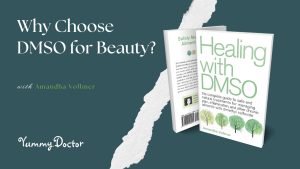
Amandha Vollmer discusses DMSO for hair growth, horsetail, rosemary, scalp microcirculation, tissue recovery, product formulation and DMSO history.

Amandha Vollmer discusses DMSO for hair growth, horsetail, rosemary, scalp microcirculation, tissue recovery, product formulation and DMSO history.
Watch now to learn how to use DMSO to begin restoring your body’s terrain, your path to real, lasting wellness starts here.

Watch a public preview of Amandha Vollmer's Private Member LIVE Q&A and see how Yummy.Doctor members bring DMSO and health questions directly to ADV.